

The Authority in Global Agricultural Chemistry & Bio-Resources
Picosecond Laser Treatment Benefits: Which Skin Concerns Respond Best?
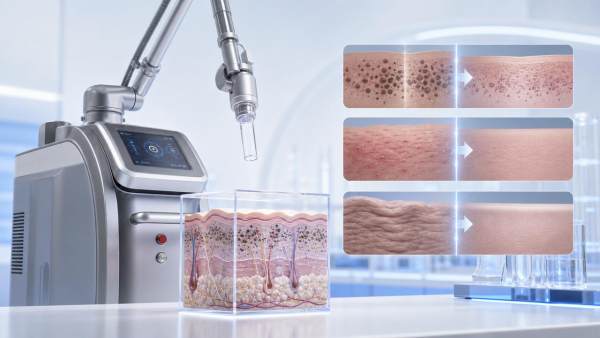
Interest in picosecond laser treatment benefits keeps rising because people want visible skin improvement without the long recovery once associated with aggressive resurfacing.
This technology sits at the center of today’s appearance economy, where medical-grade precision, safety, and convenience increasingly shape treatment choices.
For platforms like AECS, picosecond systems matter not only as clinic tools, but as a clear example of how optoelectronic engineering translates into practical anti-aging and skin renewal results.
The main question is not whether the technology sounds advanced. It is which concerns respond best, what improvements are realistic, and how to judge treatment value wisely.
Why picosecond lasers attract so much attention
A picosecond laser delivers ultra-short pulses of energy.
Those pulses are measured in trillionths of a second, which allows the device to break pigment into tiny particles while limiting unnecessary heat spread.
That balance explains many picosecond laser treatment benefits.
In simple terms, the treatment aims to do more mechanical disruption and less broad thermal injury than many older laser approaches.
This is especially relevant in a market that values shorter downtime, more personalized settings, and safer options for different skin tones.
From an industry perspective, it also reflects a larger shift.
Consumers now expect clinic-grade outcomes to be backed by real device science, not just marketing language.
Which skin concerns respond best
Not every concern responds in the same way.
The strongest candidates are usually issues linked to pigment irregularity, textural change, or selective ink removal.
Pigmentation and uneven tone
This is one of the most common reasons people explore picosecond laser treatment benefits.
Sun spots, freckles, post-inflammatory hyperpigmentation, and some stubborn patches of discoloration can respond well when the correct wavelength is used.
Because pigment is a clear target, results may become noticeable earlier than with treatments aimed at deeper structural remodeling.
Acne scars and rough texture
Picosecond devices with fractional capability are often used for shallow acne scarring and surface irregularity.
Instead of only targeting pigment, they create controlled micro-injury patterns that encourage collagen renewal over time.
Improvement is usually gradual rather than instant, but texture can become smoother after a series of sessions.
Fine lines and early photoaging
When fine lines are related to sun damage and mild collagen loss, picosecond laser treatment benefits may include fresher tone and softer textural aging signs.
This is not the same as a surgical lift.
Still, it can be a useful option for early-stage rejuvenation, especially when people want low interruption to daily life.
Tattoo ink
Tattoo removal remains a major clinical use.
The ultra-short pulse can fragment ink efficiently, which may improve clearance of certain colors and reduce damage to surrounding skin.
Results vary by ink type, depth, color, and tattoo age, so expectations should stay realistic.
Where results are more limited
Knowing the limits is just as important as knowing the strengths.
Deep wrinkles, significant skin laxity, and heavy volume loss usually need different or combined approaches.
For example, HIFU targets deeper support layers, while RF-based treatments may focus more on dermal heating and tightening.
That wider device landscape is exactly why AECS tracks medical aesthetic systems as part of a connected technology ecosystem.
Picosecond laser treatment benefits are meaningful, but they are most convincing when matched to the right concern.
What makes this technology valuable now
The current market rewards treatments that combine visible outcomes with a manageable recovery profile.
That is one reason picosecond laser treatment benefits stand out.
Many people want correction of pigment, acne marks, or early aging signs without taking a long break from work, social plans, or regular skincare.
Another reason is trust in device quality.
Across the broader aesthetic and personal care sector, purchasing decisions increasingly depend on technical credibility, safety logic, and treatment consistency.
That is where an intelligence-driven perspective becomes useful.
Understanding pulse duration, wavelength selection, spot size, and clinical protocol matters more than brand claims alone.
How to compare common treatment goals
A practical comparison can make the strongest use cases easier to understand.
What to expect during and after treatment
Most sessions are relatively quick, although treatment time depends on the area and the concern being addressed.
A topical numbing product may be used.
After treatment, redness, mild swelling, temporary darkening of pigment, or a sandpaper-like texture can appear for several days.
Downtime is often lighter than older resurfacing procedures, but “minimal downtime” does not mean “no aftercare.”
Sun protection is essential.
Post-treatment irritation, excess heat exposure, or picking at the skin can affect recovery and pigment stability.
How to judge whether it is the right choice
The most useful evaluation starts with the skin issue itself, not with the device trend.
- Clarify whether the main concern is pigment, texture, acne scarring, fine lines, or tattoo ink.
- Check whether the provider uses a wavelength and protocol suited to your skin tone and target.
- Ask how many sessions are usually needed for realistic improvement.
- Understand possible side effects, including rebound pigmentation in higher-risk skin types.
- Compare picosecond laser treatment benefits with alternatives instead of assuming one device solves every concern.
This approach is increasingly important as clinic technologies influence expectations across the wider beauty and personal care market.
The line between medical aesthetics and everyday care is becoming more connected, but treatment decisions still require careful distinction.
A more informed next step
The real value of picosecond laser treatment benefits lies in selective precision.
It performs best when the concern matches the mechanism, the settings match the skin, and expectations match the treatment pathway.
If pigmentation, post-acne discoloration, early textural aging, or certain acne scars are the main issue, this technology deserves close consideration.
If the goal is lifting, major tightening, or deep wrinkle correction, it makes sense to compare adjacent technologies as well.
A smart next move is to define the exact skin goal, review treatment parameters, and weigh recovery, safety, and expected change before choosing any plan.
That kind of structured judgment is where advanced aesthetic technology becomes genuinely useful, rather than merely impressive.
Related Intelligence
- Picosecond LasersIs a Picosecond Laser Suitable for a Consumer Beauty Device Brand?Is a picosecond laser suitable for a consumer beauty device brand? Explore safety, regulations, claims, and smart market strategies for responsible innovation.
- Picosecond LasersPicosecond Laser 532nm Explained: Best Indications, Penetration Limits, and Skin Type ConsiderationsPicosecond laser 532nm explained: discover its best uses for superficial pigment and warm tattoo colors, plus penetration limits and skin type risks before treatment.
- Picosecond LasersAesthetic Laser Devices for Acne Scars: Which Wavelengths and Pulse Modes Make a Difference?Aesthetic laser devices for acne scars: discover how wavelengths and pulse modes affect texture, pigment risk, downtime, and treatment precision for smarter device selection.
The Morning Broadsheet
Daily chemical briefings, market shifts, and peer-reviewed summaries delivered to your terminal.
