

The Authority in Global Agricultural Chemistry & Bio-Resources
Aesthetic Equipment Intelligence: Where Smart Diagnostics Improve Service Efficiency
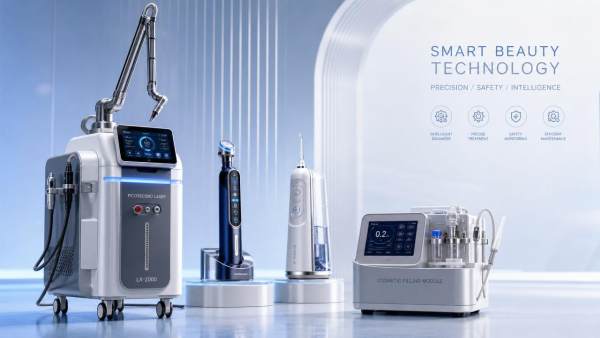
Aesthetic equipment intelligence starts with the service context
Aesthetic equipment intelligence matters most when service teams face mixed fleets, uneven usage patterns, and rising expectations for uptime.
In beauty technology, one fault code rarely means one root cause.
A picosecond laser, an RF home device, a sonic toothbrush motor, and a mask filling line may all report instability.
Yet the diagnostic path changes because heat transfer, fluid behavior, duty cycle, operator habits, and regulatory exposure are not the same.
That is why aesthetic equipment intelligence has become more than remote troubleshooting.
It now connects sensor data, service records, firmware logic, and compliance evidence into a practical decision layer.
AECS follows this shift closely across medical-grade optoelectronic systems, personal care appliances, oral care devices, and cosmetic automation.
The value is not abstract.
Smarter diagnostics reduce repeat visits, help isolate risk earlier, and protect brand credibility where safety and performance must move together.
Why the same diagnostic model fails across different equipment settings
In actual use, service efficiency depends less on the device category alone and more on the operating environment around it.
Clinic systems often run under high energy loads and strict treatment consistency requirements.
Home beauty devices face more variation in charging habits, storage temperature, and user handling.
Professional care appliances usually suffer from frequent start-stop cycles and consumable wear.
Automated cosmetic lines add another layer, because one sensor issue can affect filling accuracy, sealing speed, and batch traceability together.
Aesthetic equipment intelligence works well only when it reads these differences early.
More useful systems do not simply flag anomalies.
They rank likely causes by operating history, component stress, software version, and local compliance thresholds.
This is especially relevant in the appearance economy, where service failure quickly becomes a trust issue.
Medical aesthetic systems need diagnostics tied to energy stability
For lasers, HIFU platforms, and multi-polar RF systems, the key question is not just whether the machine runs.
The real issue is whether output remains stable enough for repeatable treatment results.
Here, aesthetic equipment intelligence should track pulse consistency, cooling behavior, handpiece degradation, and thermal drift over time.
A common misjudgment is to replace visible components first because symptoms look familiar.
In practice, irregular fluence may come from calibration drift, dirty optical paths, or unstable power conditioning.
The smarter approach is to compare recent service logs with energy delivery patterns and environmental history.
When diagnostic intelligence is strong, it helps separate urgent safety risks from serviceable performance loss.
That distinction saves time and supports documentation when regulations tighten around home-use and medical-use boundaries.
What usually deserves attention first
- Energy output trends across recent treatment cycles
- Cooling system response under peak load
- Firmware changes affecting calibration routines
- Service evidence needed for FDA or NMPA review paths
Home beauty and personal care devices create a different service picture
The service logic changes when clinic technologies move into compact consumer devices.
RF tools, EMS devices, IPL units, and high-speed hair appliances operate in less controlled conditions.
The diagnostic challenge is broader rather than deeper.
Aesthetic equipment intelligence here should weigh battery health, charging behavior, heat accumulation, motor fatigue, and misuse patterns together.
More common than catastrophic failure is inconsistent performance that users describe vaguely.
Weak airflow, unstable temperature, reduced flash response, or shorter runtime can all point to different service paths.
This is where remote diagnostics becomes valuable.
Instead of treating every complaint as a hardware defect, intelligent service models can identify software resets, charging anomalies, or consumable mismatch first.
For fast-growing global brands, that reduces unnecessary returns and preserves the premium promise attached to smart beauty devices.
Oral care and fluid-driven devices require closer attention to micro-performance
High-end oral care equipment often looks simple from the outside, but service diagnosis is rarely simple.
Sonic drive systems, magnetic levitation motors, pumps, and nozzle channels create a fluid and vibration environment that changes gradually.
Aesthetic equipment intelligence should not wait for total failure.
It should detect early signs such as weaker jet pressure, abnormal vibration signatures, water path blockage, or seal wear.
The reason is practical.
Minor micro-fluid deviations can change cleaning performance long before users notice obvious malfunction.
AECS often frames this through foundational physics.
If cavitation effects, motor vibration frequency, and pressure consistency are monitored together, troubleshooting becomes more accurate and less wasteful.
Automation lines need aesthetic equipment intelligence beyond machine repair
In cosmetic manufacturing, diagnostics affect output quality as much as maintenance speed.
A vacuum emulsification issue may later appear as texture inconsistency.
A filling deviation may first look like a packaging matter.
Aesthetic equipment intelligence becomes valuable when it links upstream mechanics with downstream quality signals.
This is a different discipline from replacing a failed part.
It requires data from pumps, heaters, seals, conveyors, and inspection modules to be read as one process story.
A frequent mistake is to judge efficiency only by immediate restart speed.
If line recovery ignores contamination risk, fill variance, or traceability gaps, service appears fast but becomes expensive later.
In this setting, smart diagnostics should support maintenance, quality assurance, and documentation together.
Where misjudgment usually happens before service data is organized
The biggest service errors are often not technical limitations.
They come from reading similar symptoms as identical problems.
Weak output can mean aging optics in one system and software throttling in another.
Temperature drift can come from airflow blockage, ambient heat, sensor offset, or overuse beyond designed duty cycles.
- Looking only at rated parameters, not field conditions
- Focusing on purchase cost, not service frequency or replacement cost
- Treating a firmware issue as a hardware issue
- Ignoring compatibility between updates, accessories, and consumables
- Missing compliance implications when diagnostics alter safety settings
Better aesthetic equipment intelligence reduces these errors by building service logic around context, not just alarms.
Practical ways to match diagnostics with real operating needs
A useful deployment model starts with segmentation.
Separate high-risk energy devices, high-frequency consumer tools, fluid-driven oral care systems, and process-linked production equipment.
Then define what the diagnostic layer must prove in each setting.
In some cases it must prove safety readiness.
In others, it must confirm performance consistency or justify preventive maintenance timing.
The more reliable path usually includes four actions.
- Map fault history against usage intensity, not calendar time alone
- Define threshold alerts by device physics, not generic alarm ranges
- Preserve service records that support audits and warranty review
- Review whether remote fixes can solve issues before dispatch decisions
AECS reflects this cross-disciplinary method well.
Thermodynamics, fluid dynamics, regulatory shifts, and commercial service pressure must be read together.
That is where aesthetic equipment intelligence moves from a support tool to a service strategy.
The next step is to define fit before scaling service rules
Not every device fleet needs the same diagnostic depth.
The better next step is to sort actual operating scenarios, failure patterns, compliance exposure, and maintenance frequency first.
From there, aesthetic equipment intelligence can be matched to the right level of monitoring, traceability, and remote intervention.
This makes service efficiency more credible because it is based on the realities of use.
It also helps clarify which parameters deserve constant tracking, which failures justify preventive replacement, and where implementation costs may outweigh benefits.
When those conditions are clear, smart diagnostics stop being a feature list and become a practical operating advantage.
Related Intelligence
- Optoelectronics & Dermal TechAesthetic Equipment Comparison Chart: Treatment Uses, Skin Types, and DowntimeExplore our aesthetic equipment comparison chart to compare treatment uses, skin-type suitability, and downtime. Discover key safety checks and make smarter device purchasing decisions.
- Optoelectronics & Dermal TechChoosing a Collagen Stimulation Device Manufacturer: Evidence and Quality ChecksChoose a collagen stimulation technology manufacturer with confidence. Learn how to verify clinical evidence, regulatory status, production quality, and service before you buy.
- Optoelectronics & Dermal TechAesthetic Device Solutions: What Multi-Treatment Clinics Should EvaluateAesthetic device solutions for multi-treatment clinics: evaluate safety, workflow, versatility, lifecycle costs, and supplier support before investing.
The Morning Broadsheet
Daily chemical briefings, market shifts, and peer-reviewed summaries delivered to your terminal.
