

The Authority in Global Agricultural Chemistry & Bio-Resources
Where aesthetic equipment intelligence creates real value
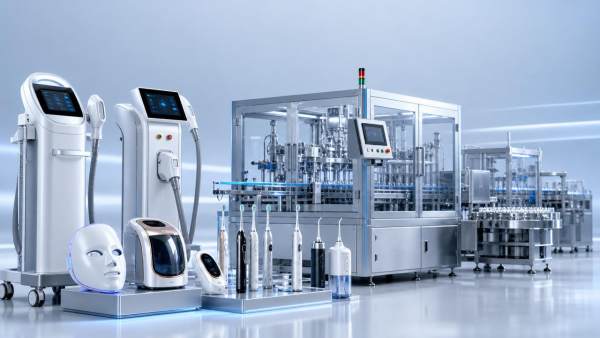
In a market where performance, compliance, and speed to innovation define competitive advantage, aesthetic equipment intelligence creates real value by turning complex technology signals into actionable business insight. From medical aesthetic devices and home beauty systems to oral care appliances and automated cosmetics production, AECS helps decision-makers identify growth opportunities, reduce risk, and build stronger premium brands in the global appearance economy.
For business leaders, the challenge is no longer access to information. It is filtering signal from noise across engineering, regulation, channel economics, and product design. Aesthetic equipment intelligence matters because a wrong specification, a delayed compliance response, or a weak positioning strategy can extend launch timelines by 3–9 months and dilute margins across multiple markets.
AECS operates at the intersection of medical-grade optoelectronics, consumer appliance engineering, oral care fluid dynamics, and cosmetics manufacturing automation. That cross-disciplinary view is increasingly important as the appearance economy evolves from category competition into system competition, where device efficacy, safety documentation, production consistency, and premium branding must work together.
Why aesthetic equipment intelligence now drives board-level decisions
In the past, many manufacturers evaluated products mainly by hardware cost and shipment volume. Today, decision-makers must assess at least 4 layers at once: technical performance, regulatory exposure, user safety, and commercialization fit. This shift is especially visible in medical aesthetic devices, home beauty systems, and automated beauty manufacturing lines.
Aesthetic equipment intelligence creates real value when it shortens the path from laboratory possibility to scalable business reality. For example, a picosecond laser platform may look attractive on paper, but purchasing logic changes once a team compares wavelength strategy, pulse energy stability, operator training burden, spare parts planning, and local registration requirements across 2–3 target markets.
From isolated product data to investable business judgment
Decision-makers rarely fail because they lack product brochures. They fail when product data is disconnected from channel strategy and compliance timing. A home RF device, for instance, may be technically impressive, but if its thermal control tolerance is too loose, post-sale risk rises and brand trust drops quickly in cross-border DTC channels.
The same applies to oral care and personal care appliances. A 110,000 RPM brushless motor sounds commercially powerful, yet the real question is whether vibration, heat management, acoustic control, and service life remain stable over 300–500 hours of normal use. Intelligence converts engineering claims into decision-grade evaluation.
Key pressures reshaping procurement and product planning
- Regulatory reclassification of home-use devices in multiple markets
- Higher consumer scrutiny of safety, efficacy, and clinical validation
- Premiumization pressure in beauty, oral care, and hair care categories
- Need to reduce time-to-launch from 12 months to 6–9 months where feasible
- Rising importance of modular manufacturing and flexible SKU production
The table below shows how aesthetic equipment intelligence supports different categories and where the highest decision value typically appears.
The key takeaway is that intelligence is not a research luxury. It is an operating asset. In categories where one design or compliance mistake can affect 10,000–100,000 units, better early judgment often produces stronger value than aggressive late-stage troubleshooting.
Where value is created across the five AECS pillars
AECS focuses on five pillars because the appearance economy is built through connected systems rather than isolated hero products. Each pillar has distinct technical logic, but all five share the same commercial requirement: translate performance into reliable, scalable, and compliant market execution.
Medical aesthetic optoelectronic devices
This segment includes technologies such as picosecond lasers, HIFU, and multi-polar RF systems. Here, aesthetic equipment intelligence creates real value by clarifying whether energy delivery is clinically meaningful, commercially defendable, and safe under repeated use. Procurement teams should review at least 6 checkpoints: output consistency, cooling strategy, treatment protocol adaptability, consumable dependency, maintenance cycle, and training depth.
For example, HIFU systems targeting dermis and SMAS layers require more than marketing language about lifting. Teams need to understand focal depth options, thermal distribution behavior, and the expected service intervals for core modules. In practical terms, maintenance planning over 12–24 months can materially affect total ownership cost.
Home beauty and anti-aging devices
Clinic-derived technologies such as RF and EMS now compete in handheld consumer formats. That democratization expands demand, but it also raises risk. A handheld device must balance efficacy with user tolerance, battery constraints, and simplified instructions. If treatment intensity is inconsistent, even strong branding will struggle to sustain repurchase and referral.
Decision-makers should test not only hardware output but also the full experience chain: charging time, treatment duration, skin-contact feedback, firmware stability, and support burden in the first 90 days after launch. In fast-moving DTC markets, poor onboarding can push return ratios far above healthy thresholds.
Professional personal care and high-end oral care appliances
High-speed hair care devices, IPL units, sonic toothbrushes, and water flossers have become engineering-led premium consumer categories. The opportunity is large, but the winning edge is rarely one feature alone. It is the combination of motor architecture, thermal management, acoustic performance, ergonomic design, and long-cycle reliability.
In oral care, the fluid dynamics of water flosser jets and the vibration behavior of magnetic levitation sonic motors directly affect cleaning effectiveness and comfort. A device that performs well in a lab but causes excessive splashing, sensitivity, or nozzle wear may lose user trust in under 6 months.
Cosmetics automated production lines
Beauty brands increasingly rely on flexible automation to support shorter product cycles and greater SKU diversity. From nano-scale vacuum homogenizing emulsification to filling and sealing lines processing hundreds of masks per minute, manufacturing intelligence determines whether scale can grow without sacrificing consistency.
For enterprises expanding into premium skincare, the difference between a 30-minute and 90-minute cleaning changeover can influence line utilization, order responsiveness, and margin structure. Aesthetic equipment intelligence helps leaders compare not just machine speed, but also validation workload, CIP compatibility, and formula sensitivity.
How enterprise buyers should evaluate opportunity, risk, and timing
For enterprise buyers, the central question is not simply which equipment is advanced. It is which equipment aligns with target market regulation, brand positioning, service capability, and expected commercialization speed. Aesthetic equipment intelligence creates real value when evaluation becomes structured, comparable, and repeatable.
A practical 5-step evaluation framework
- Define the market entry goal: clinical, prosumer, premium retail, or OEM supply.
- Map critical specifications: power, thermal range, vibration rate, output stability, and maintenance intervals.
- Review compliance exposure across 2–4 priority regions before tooling or packaging is finalized.
- Estimate commercial fit: price corridor, training burden, service readiness, and expected return profile.
- Run pilot validation with engineering, regulatory, and channel stakeholders before full rollout.
The table below provides a decision matrix that many leadership teams can adapt during supplier selection or internal product planning.
This matrix highlights a recurring reality: purchase price is only one line item. In premium beauty and personal care equipment, hidden costs often appear in rework, claims revision, user education, and post-launch support. A better decision process can protect both EBITDA and brand equity.
Common blind spots in cross-border expansion
One of the most frequent blind spots is assuming that one successful domestic product configuration will transfer easily to other regions. In practice, acceptable claims language, safety expectations, and documentation requirements can vary significantly. A device marketed as a beauty appliance in one market may face medical-device scrutiny in another.
Another blind spot is overvaluing feature density. More modes, more attachments, or stronger energy output do not always create better market fit. In many B2B cases, a simplified device with tighter control logic, lower training requirements, and fewer service events performs better over a 24-month channel cycle.
Recommended buyer checklist
- Confirm whether the intended claims trigger additional registration obligations.
- Request durability and stability evidence over realistic usage intervals.
- Check whether the supplier can support 2nd-generation upgrades within 6–12 months.
- Review consumables, spare parts, and firmware support as part of total cost.
- Align packaging, instructions, and after-sales workflows with target geography.
Turning intelligence into execution: the AECS advantage
What differentiates AECS is not only category coverage, but the ability to connect technical analysis, compliance interpretation, and business modeling. This matters because enterprise leaders do not need fragmented commentary. They need decision support that explains why a certain RF architecture, water flosser jet structure, or emulsification configuration is commercially meaningful.
The AECS Strategic Intelligence Center brings together compliance, foundational physics, and aesthetic capital logic. That combination helps enterprises evaluate whether a device or production system can support a premium moat built on medical-grade professionalism and absolute safety, while still fitting real-world channel economics and manufacturing timelines.
What enterprise teams gain from a structured intelligence approach
First, they gain clearer product roadmaps. Instead of reacting to competitor launches, teams can prioritize 3–5 categories where technical differentiation and regulatory feasibility are strongest. Second, they gain better supplier conversations because internal stakeholders can compare engineering claims against business targets in a common framework.
Third, they reduce avoidable risk. Whether the issue is FDA or NMPA classification sensitivity, thermal safety in home-use RF devices, or throughput consistency on mask filling lines, early intelligence reduces costly late-stage correction. For many growing brands, that can be the difference between a smooth international rollout and repeated commercial resets.
Best-fit organizations
AECS is particularly relevant for manufacturers, OEMs, brand owners, and investors operating in medical aesthetics, home beauty, personal care appliances, oral care technology, and beauty production equipment. It is also useful for enterprises preparing to move from single-product growth into multi-category system expansion within the next 12–36 months.
When the market becomes more technical and more regulated at the same time, intuition alone is not enough. Aesthetic equipment intelligence creates real value when it helps leaders choose the right device architecture, the right compliance path, the right manufacturing logic, and the right market timing with greater confidence.
For decision-makers in the appearance economy, value is created where insight changes action: better specifications, safer launches, faster validation, stronger premium positioning, and more resilient cross-border growth. AECS supports that shift by connecting optoelectronic science, personal care engineering, oral care dynamics, and automated cosmetics manufacturing into one strategic view.
If your team is evaluating new categories, optimizing existing equipment portfolios, or planning an international launch, now is the right time to turn technical complexity into commercial clarity. Contact AECS to get a tailored intelligence perspective, discuss product and compliance priorities, and explore solutions that fit your growth strategy.
Related Intelligence
- Optoelectronics & Dermal TechAesthetic Equipment Comparison Chart: Treatment Uses, Skin Types, and DowntimeExplore our aesthetic equipment comparison chart to compare treatment uses, skin-type suitability, and downtime. Discover key safety checks and make smarter device purchasing decisions.
- Optoelectronics & Dermal TechChoosing a Collagen Stimulation Device Manufacturer: Evidence and Quality ChecksChoose a collagen stimulation technology manufacturer with confidence. Learn how to verify clinical evidence, regulatory status, production quality, and service before you buy.
- Optoelectronics & Dermal TechAesthetic Device Solutions: What Multi-Treatment Clinics Should EvaluateAesthetic device solutions for multi-treatment clinics: evaluate safety, workflow, versatility, lifecycle costs, and supplier support before investing.
The Morning Broadsheet
Daily chemical briefings, market shifts, and peer-reviewed summaries delivered to your terminal.
