

The Authority in Global Agricultural Chemistry & Bio-Resources
What defines reliable optoelectronic aesthetic equipment
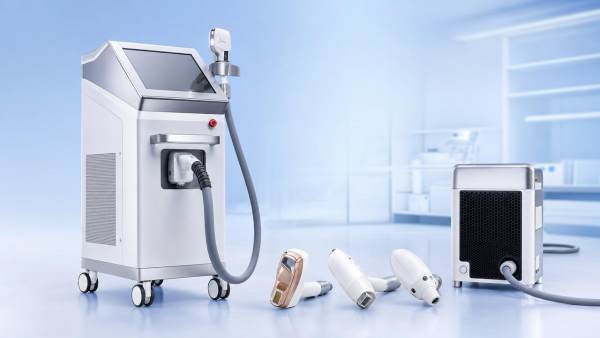
For procurement teams, reliable optoelectronic aesthetic equipment is defined by more than attractive specifications. It depends on verified energy consistency, safety compliance, component durability, treatment precision, and dependable after-sales support. In a market shaped by performance, regulation, and brand reputation, understanding these core factors helps buyers reduce risk, compare suppliers with confidence, and invest in systems that deliver lasting clinical and commercial value.
Why a checklist matters for optoelectronic aesthetic equipment
The category includes lasers, IPL, RF, HIFU, EMS, and hybrid systems. Each technology has different risks, treatment targets, and maintenance requirements.
A checklist helps separate real device reliability from marketing language. It also creates a consistent way to compare suppliers, test reports, and long-term ownership cost.
For global aesthetic and personal care markets, reliability affects treatment outcomes, operator safety, regulatory exposure, consumable planning, and brand reputation at the same time.
Core checklist: what defines reliable optoelectronic aesthetic equipment
- Verify energy consistency across repeated shots, not just peak output, using test data that shows stable fluence, pulse width, and spot delivery under continuous operation.
- Check safety compliance against applicable standards, including electrical safety, EMC, biocompatibility where relevant, and market-specific registration or certification documentation.
- Inspect treatment precision by reviewing beam profile, target depth control, cooling stability, and software calibration methods that reduce operator-dependent variation.
- Confirm component durability for laser sources, capacitors, pumps, power modules, connectors, handpieces, and cooling units under realistic duty-cycle conditions.
- Review thermal management performance because reliable optoelectronic aesthetic equipment must control heat buildup to protect energy delivery accuracy and patient comfort.
- Request maintenance records, fault-rate history, and mean time between failures to understand field reliability beyond laboratory demonstrations or showroom testing.
- Evaluate software architecture, including parameter lockout, treatment logs, upgrade control, and alarm systems that improve traceability and operational safety.
- Audit consumable economics by checking lamp life, crystal wear, cartridge availability, filter replacement, and calibration frequency across the expected ownership period.
- Confirm after-sales capability through spare-parts stock, response times, remote diagnostics, engineer training, and documentation quality for troubleshooting and preventive service.
- Compare clinical evidence, user references, and application boundaries so the selected optoelectronic aesthetic equipment matches real treatment indications and business positioning.
How to assess each reliability factor in practice
Energy stability and output truthfulness
Reliable optoelectronic aesthetic equipment should maintain stable output during long sessions. Ask for shot-to-shot variance data, not only nominal power or maximum energy claims.
For IPL and laser platforms, unstable fluence creates inconsistent clinical results. It can also increase retreatment rates and make operator technique look worse than it is.
Safety, compliance, and risk control
Documentation should be complete, current, and linked to the exact model offered. Generic certificates with unclear scope are a warning sign in optoelectronic aesthetic equipment sourcing.
A strong supplier can explain how the system manages over-temperature events, contact sensing, cooling faults, emergency stops, and parameter limits in everyday use.
Hardware life and serviceability
A device may perform well when new but become costly if key modules fail early. Focus on service intervals, replacement procedures, and parts commonality across product lines.
In premium systems, serviceability is part of reliability. Fast access to pumps, filters, seals, handpieces, and boards reduces downtime and protects utilization rates.
Scenario-based guidance for different applications
For medical aesthetic treatment platforms
When the device targets pigmentation, vascular lesions, resurfacing, or lifting, precision matters more than headline power. Beam quality, depth control, and cooling design should lead evaluation.
Clinical documentation should match skin types, treatment intervals, and adverse-event controls. Reliable optoelectronic aesthetic equipment in this segment must perform consistently across complex indications.
For home beauty and anti-aging devices
In consumer-facing products, reliability includes usability and misuse prevention. Output limits, skin-contact sensing, intuitive interfaces, and charger safety become especially important.
Compact RF, EMS, and IPL systems also need strong lifecycle validation. Miniaturization should not sacrifice thermal stability, battery durability, or accuracy of energy delivery.
For cross-category personal care portfolios
Some organizations compare optoelectronic aesthetic equipment with oral care, hair care, or beauty automation assets. In such cases, standardize evaluation around uptime, safety, and service response.
This approach fits broader appearance-economy strategies, where brand trust depends on repeatable product performance across medical-grade systems and everyday care technologies.
Commonly overlooked risks
- Ignoring duty cycle limits. Some systems show strong short tests but degrade during continuous use, which is where true optoelectronic aesthetic equipment reliability is revealed.
- Accepting unclear consumable life claims. Lamp shots, crystal longevity, and handpiece wear should be documented under defined testing conditions.
- Overlooking calibration discipline. A device without robust calibration routines may drift slowly, causing invisible performance loss before obvious faults appear.
- Underestimating software dependence. Weak firmware control can create safety gaps, parameter inconsistency, and difficult fault tracing after updates or repairs.
- Treating support as secondary. Slow spare-parts delivery can turn a technically capable system into an unreliable commercial asset.
Practical execution steps before selection
- Build a comparison sheet covering energy stability, certifications, cooling design, key component brands, consumables, software functions, warranty, and service response.
- Request original test reports and sample maintenance logs, then cross-check serial numbers, report dates, and model references for consistency.
- Run a practical demonstration under consecutive treatment cycles, not only a short showcase, to expose thermal drift or unstable output.
- Calculate total ownership cost over several years, including downtime risk, consumables, preventive maintenance, and likely replacement of major modules.
- Validate the support chain by confirming engineer coverage, remote diagnostics, training materials, and spare-parts availability in target markets.
Conclusion and next action
Reliable optoelectronic aesthetic equipment is defined by measurable consistency, compliant design, durable components, precise treatment control, and responsive support after delivery.
The best decision comes from structured verification rather than brochure claims. Use a checklist, compare evidence line by line, and test the system under realistic working conditions.
In the wider appearance economy, this disciplined approach protects clinical outcomes, supports brand credibility, and improves long-term commercial performance across advanced aesthetic technology investments.
Related Intelligence
- Optoelectronics & Dermal TechAesthetic Equipment Comparison Chart: Treatment Uses, Skin Types, and DowntimeExplore our aesthetic equipment comparison chart to compare treatment uses, skin-type suitability, and downtime. Discover key safety checks and make smarter device purchasing decisions.
- Optoelectronics & Dermal TechChoosing a Collagen Stimulation Device Manufacturer: Evidence and Quality ChecksChoose a collagen stimulation technology manufacturer with confidence. Learn how to verify clinical evidence, regulatory status, production quality, and service before you buy.
- Optoelectronics & Dermal TechAesthetic Device Solutions: What Multi-Treatment Clinics Should EvaluateAesthetic device solutions for multi-treatment clinics: evaluate safety, workflow, versatility, lifecycle costs, and supplier support before investing.
The Morning Broadsheet
Daily chemical briefings, market shifts, and peer-reviewed summaries delivered to your terminal.
