

The Authority in Global Agricultural Chemistry & Bio-Resources
What fluid dynamics in beauty reveals about serum delivery
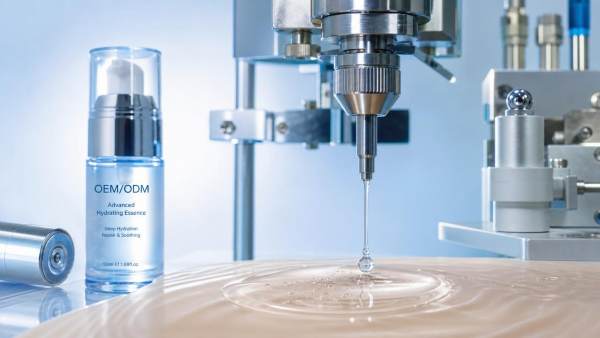
What can fluid dynamics in beauty teach technical evaluators about serum delivery performance? From nozzle geometry and droplet size to shear forces, viscosity, and skin-surface spread, these hidden variables determine whether a serum reaches its target efficiently and safely. This article connects foundational engineering principles with real-world beauty applications, helping professionals assess delivery systems with greater precision, compliance awareness, and product-development insight.
For technical evaluators working across beauty devices, cosmetic packaging, and automated filling systems, serum delivery is not a soft marketing topic. It is a measurable transport problem shaped by pressure, rheology, energy transfer, and interface behavior. In the AECS view of the appearance economy, every drop of serum sits at the intersection of device engineering, formulation science, and safety validation.
Whether the application format is an airless pump, electrospray-inspired atomizer, roller-assisted applicator, water-based infusion handpiece, or automated filling line, fluid dynamics in beauty affects dose accuracy, droplet breakup, skin coverage, residue loss, and contamination risk. Small design shifts of 0.1 mm in nozzle diameter or 10% in viscosity can materially change user feel and technical performance.
Why Fluid Dynamics in Beauty Matters for Serum Delivery Evaluation
Serum delivery is often judged by visible spread and consumer perception, yet the deeper engineering question is transport efficiency. How much product leaves the reservoir, how uniformly it disperses, how much remains on the surface, and how quickly it evaporates or drains all depend on fluid dynamics in beauty systems.
For evaluators, four baseline performance targets usually define a credible delivery system: dose repeatability within ±5% to ±10%, stable spray or flow pattern over 500 to 5,000 cycles, skin-contact safety under expected shear conditions, and acceptable compatibility across low-, medium-, and high-viscosity formulations.
The Core Engineering Variables
The most influential variables include viscosity, density, surface tension, pressure differential, nozzle geometry, discharge velocity, and substrate interaction. In practical beauty delivery, these variables govern whether a serum forms a coherent jet, a mist, a coarse spray, or a pooling film.
- Viscosity range: many serum systems operate between 10 cP and 5,000 cP.
- Nozzle orifice size: common small-format dispensers may range from 0.15 mm to 0.50 mm.
- Droplet diameter: mist-like delivery may target roughly 20–80 μm, while coarse spray can exceed 100 μm.
- Dispense volume: consumer-facing formats often target 0.05 mL to 0.30 mL per actuation.
A technical mistake occurs when one metric is optimized at the expense of others. Reducing droplet size can improve spread uniformity, but it may also increase airborne loss, formulation oxidation, or instability for active ingredients sensitive to interfacial stress.
Why Surface Behavior Is as Important as Exit Behavior
Many teams focus only on what happens inside the pump or nozzle. Yet after discharge, serum must wet, spread, and remain on a non-uniform biological surface with microrelief, sebum variation, and temperature differences of 2°C to 5°C across zones of the face.
A serum that exits cleanly but beads on the skin can show poor perceived penetration and uneven active distribution. For this reason, fluid dynamics in beauty should always be evaluated together with contact angle behavior, spreading radius, and drying or runoff time.
The table below translates common fluid-dynamic variables into practical evaluation points for technical review teams working in device selection, packaging design, or pilot production.
A key conclusion is that no single parameter predicts performance. Evaluators need a linked model: internal flow, discharge pattern, skin interaction, and packaging compatibility must be reviewed as one system rather than four isolated checkpoints.
Key Delivery Mechanisms: From Nozzle Geometry to Skin-Surface Spread
Different serum platforms use different flow regimes. Some depend on pressure-driven jets, some on capillary-assisted release, and others on mechanical spreading after deposition. Technical evaluation should begin by identifying the dominant delivery mechanism and its main failure mode.
Nozzle Geometry and Flow Path Design
Nozzle geometry determines whether energy is converted into a stable spray cone, a narrow stream, or irregular sputtering. Short flow paths reduce resistance but can increase instability. Longer paths smooth flow but raise pressure demand and may increase residual retention by 3% to 8%.
In high-value serum packaging, geometry also interacts with manufacturing tolerances. A deviation of ±0.02 mm at the orifice or swirl chamber can shift droplet distribution enough to alter user experience, especially in low-dose applications under 0.10 mL per stroke.
What evaluators should inspect
- Entrance and exit diameters, including tolerance windows.
- Presence of swirl features or mixing chambers.
- Internal dead zones that may trap serum and support buildup.
- Clogging behavior after 24-hour, 72-hour, and repeated-use pauses.
Droplet Size Distribution and Coverage Efficiency
Droplet size should not be treated as a cosmetic-only metric. It shapes transfer efficiency, sensory perception, and safety. Very fine droplets can feel elegant, but if too many fall below about 30 μm, airborne drift may increase and actual deposition on skin may decline.
Conversely, coarse droplets above 120 μm may reduce drift but create uneven wet patches, local overload, or product runoff. For facial serum delivery, many systems perform best in the middle zone where spread is uniform but overspray remains manageable.
Shear Forces and Formula Integrity
Fluid dynamics in beauty becomes especially important when formulas contain emulsions, polymers, peptides, hyaluronic acid, or encapsulated actives. High shear through narrow channels can reduce molecular structure, alter viscosity profile, or break emulsion droplets, leading to phase instability over time.
This is where device teams and formulation teams often misalign. A dispenser that works perfectly with a 50 cP water-based essence may underperform or damage a 2,000 cP active serum. Validation should therefore include at least 3 formulation classes rather than one hero sample.
Skin Wetting, Spread Radius, and Retention
Once the serum reaches skin, the balance between viscosity and surface tension affects spread radius and film thickness. A low-contact-angle formula may cover a larger area in 2 to 5 seconds, but if too mobile, it can migrate away from the intended treatment zone.
For evaluators of premium beauty systems, a useful benchmark is not only visible spread but controlled spread. The better question is whether 80% to 90% of dispensed serum remains within the target application area after 10 seconds of use.
How Technical Evaluators Can Test Fluid Dynamics in Beauty Systems
A robust evaluation framework combines benchtop fluid testing, packaging checks, user-condition simulation, and production-level consistency review. This matters for brands, OEMs, and equipment suppliers because lab success often disappears when scale-up introduces tolerance variation and filling stress.
A Practical 5-Step Assessment Workflow
- Characterize the serum: viscosity, density, surface tension, and stability at 20°C, 25°C, and 40°C.
- Measure device output: dispense volume, spray angle, droplet pattern, and actuation force over 100 to 500 cycles.
- Simulate use conditions: orientation changes, pause-and-restart behavior, and partial-fill scenarios.
- Check skin analog performance: spread radius, retention, runoff, and residue on artificial or standardized surfaces.
- Review scale-up fit: compatibility with filling lines, sealing, cleaning, and transport vibration.
This workflow helps reduce a common procurement problem: selecting a package or applicator based on appearance, then discovering after pilot launch that output drift or clogging rates are too high for reliable market rollout.
Critical Test Metrics for Decision-Making
The table below outlines measurable checkpoints that translate fluid dynamics in beauty into procurement and validation criteria. These are not fixed universal standards, but practical ranges often used for comparative review across device and packaging candidates.
Among these metrics, residual loss and restart reliability are often undervalued. Yet they directly affect complaint rates, return risk, and actual commercial efficiency, especially in high-cost serums where every 1% of wasted fill matters.
Linking Lab Evaluation to Automated Manufacturing
AECS tracks not only end-use beauty devices but also cosmetics automated production lines. That connection matters because filling, homogenization, and sealing influence downstream delivery behavior. A serum processed under high vacuum homogenization may exit differently from one with broader droplet-size dispersion in the bulk phase.
For production teams, technical evaluation should include at least 3 interfaces: bulk formulation rheology after manufacturing, package filling behavior at line speed, and final-use discharge performance. Ignoring any one of these can create hidden mismatch between R&D and commercialization.
Common Risks, Selection Mistakes, and Compliance Considerations
In beauty and personal care, poor serum delivery rarely fails in a dramatic way. It fails quietly through inconsistency, active degradation, leakage, overdosing, microbial exposure, or a user feel that does not match premium positioning. Technical evaluators should therefore watch for subtle system-level risks.
Frequent Evaluation Mistakes
- Testing with one model formula only, despite planned commercial viscosity variation of 3x to 10x.
- Approving based on initial spray visuals without 500-cycle durability checks.
- Ignoring orientation sensitivity, even though consumers use devices at 0°, 45°, and nearly 90° angles.
- Separating packaging review from filling-line review, which can hide compatibility failures.
These mistakes are costly because they usually surface after artwork approval, pilot build, or export planning. At that stage, redesign can add 4 to 12 weeks and create unnecessary supply-chain friction.
Compliance and Safety Signals to Review
While not every serum system falls into a medical-device category, evaluators should still review delivery claims, material compatibility, preservative protection, and user-contact safety. If a device implies enhanced penetration, heating, or infusion, the regulatory pathway may become more sensitive across different markets.
For export-oriented brands, it is practical to review at least 4 compliance dimensions early: contact material safety, dosing consistency records, cleaning or contamination controls, and the wording used around penetration or efficacy claims. This reduces later risk during cross-border review.
A Smarter Procurement Lens for B2B Buyers
When comparing delivery systems, buyers should score options against a multi-factor matrix rather than headline aesthetics. Useful weighting categories include 30% performance consistency, 25% formulation compatibility, 20% manufacturing fit, 15% compliance readiness, and 10% serviceability.
This kind of matrix helps explain why the cheapest component may not be the lowest-risk choice. If a low-cost applicator raises product loss from 3% to 8% or doubles clogging incidents, the lifetime commercial cost can exceed the initial savings very quickly.
What Fluid Dynamics in Beauty Reveals About Better Product Development
The broader lesson is that fluid dynamics in beauty is not confined to laboratories. It directly shapes premium positioning, repeat purchase likelihood, and manufacturability. A serum that delivers evenly, feels elegant, and protects actives under real-use conditions is usually the product of disciplined cross-functional engineering.
For AECS-aligned stakeholders across aesthetic devices, oral-care fluid systems, personal care appliances, and cosmetic production equipment, the same principle applies: performance lives in the interaction between physics and user experience. The most successful systems are engineered, not merely styled.
Technical evaluators who assess nozzle geometry, droplet behavior, shear exposure, and skin-surface spread as one integrated framework will make better decisions in sourcing, validation, and product launch planning. If you need a more precise evaluation pathway for serum delivery platforms, automated packaging interfaces, or beauty device compatibility, contact us to discuss tailored solutions, product details, or a customized technical review.
Related Intelligence
- Optoelectronics & Dermal TechAesthetic Equipment Comparison Chart: Treatment Uses, Skin Types, and DowntimeExplore our aesthetic equipment comparison chart to compare treatment uses, skin-type suitability, and downtime. Discover key safety checks and make smarter device purchasing decisions.
- Optoelectronics & Dermal TechChoosing a Collagen Stimulation Device Manufacturer: Evidence and Quality ChecksChoose a collagen stimulation technology manufacturer with confidence. Learn how to verify clinical evidence, regulatory status, production quality, and service before you buy.
- Optoelectronics & Dermal TechAesthetic Device Solutions: What Multi-Treatment Clinics Should EvaluateAesthetic device solutions for multi-treatment clinics: evaluate safety, workflow, versatility, lifecycle costs, and supplier support before investing.
The Morning Broadsheet
Daily chemical briefings, market shifts, and peer-reviewed summaries delivered to your terminal.
