

The Authority in Global Agricultural Chemistry & Bio-Resources
Professional beauty equipment costs more for good reasons
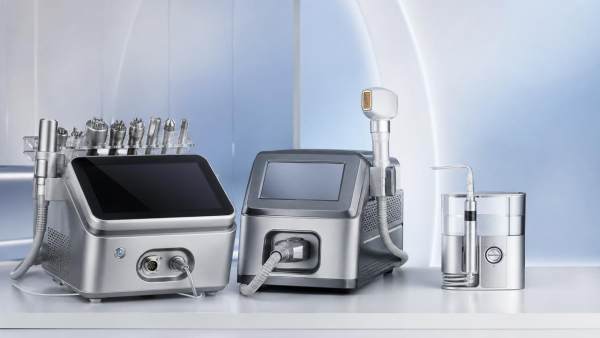
Why does professional beauty equipment cost more? The short answer is simple: better engineering, stricter safety, and more dependable outcomes require greater investment.
In the global appearance economy, price is rarely about casing alone. It reflects component quality, device intelligence, regulatory discipline, and lifetime service stability.
For medical aesthetic systems, home beauty tools, oral care appliances, and automated cosmetic machinery, professional beauty equipment creates measurable business value beyond first purchase cost.
What professional beauty equipment means in today’s market
Professional beauty equipment refers to systems built for precise, repeatable, and safe performance under demanding commercial or clinical conditions.
This includes optoelectronic aesthetic platforms, RF and EMS devices, IPL hair removal tools, sonic oral care appliances, and cosmetic production equipment.
Compared with entry-level alternatives, professional beauty equipment is designed around validated energy control, material durability, and compliance-ready documentation.
Its higher price usually covers advanced thermal management, calibrated output, software protections, traceable supply chains, and after-sales technical support.
Core characteristics
- Stable output across long operating cycles
- Safety systems that reduce misuse and overheating risks
- Higher-grade motors, optics, sensors, and power modules
- Regulatory alignment for export and brand protection
- Documented performance for premium market positioning
Industry background shaping the price of professional beauty equipment
The beauty and personal care sector has become deeply technology-driven. Buyers increasingly compare not only features, but also certification, consistency, and lifecycle risk.
Demand is rising for anti-aging systems, smart personal care devices, and efficient beauty manufacturing lines. That demand pushes performance standards upward.
At the same time, regulators are paying closer attention to energy-based devices, home-use treatment tools, electrical safety, and product claims.
Why professional beauty equipment costs more in practical terms
The price premium behind professional beauty equipment becomes clear when the cost structure is examined step by step.
1. Higher-grade components
Medical-grade optics, brushless high-speed motors, precision pumps, insulated power systems, and durable housings are significantly more expensive than generic parts.
These components are selected for endurance, output stability, and lower failure rates, not only for attractive specifications on paper.
2. Engineering depth and performance validation
Reliable RF heating, laser pulse control, sonic vibration, airflow, or emulsification all depend on serious physics-based engineering.
Professional beauty equipment often requires repeated prototyping, thermal simulation, fluid dynamic tuning, and long-cycle endurance testing before launch.
3. Safety systems and compliance investment
A safer device usually contains more sensors, better insulation, tighter tolerances, software lockouts, and clearer use boundaries.
Certification work, technical files, EMC testing, electrical safety verification, and traceability systems add cost, but reduce regulatory and reputational risk.
4. Treatment consistency and user confidence
Low-cost devices may work sometimes. Professional beauty equipment is expected to work predictably, repeatedly, and within controlled operating ranges.
That consistency supports better reviews, fewer returns, and stronger trust in premium channels.
5. Full lifecycle support
Professional beauty equipment often includes firmware updates, spare parts planning, maintenance guidance, training support, and technical troubleshooting.
Those invisible service layers matter when uptime, customer satisfaction, and compliance records affect long-term revenue.
Business value across major beauty technology segments
The return on professional beauty equipment becomes easier to understand when viewed by application category.
For example, a high-speed dryer with smart temperature control can protect hair, reduce noise, and improve user experience over thousands of cycles.
Likewise, a water flosser with tuned fluid dynamics can provide more effective plaque disruption while staying within safer comfort limits.
Typical scenarios where premium equipment pays back
- Launching a premium direct-to-consumer beauty device line
- Expanding into regulated export markets with stricter documentation demands
- Upgrading an anti-aging portfolio with better treatment consistency
- Reducing return rates caused by unstable heating, weak motors, or poor durability
- Improving cosmetic manufacturing quality through controlled mixing and filling
In these situations, cheaper alternatives may create hidden costs through warranty claims, weak reviews, downtime, or delayed market access.
Professional beauty equipment usually protects margin by reducing those operational losses.
Practical evaluation points before comparing quotes
A lower quotation can be misleading if it excludes validation, support, or compliance readiness. A structured review helps reveal the real cost picture.
Key checkpoints
- Check certifications, test reports, and intended market claims.
- Review component grades and expected service life.
- Ask how output consistency is calibrated and verified.
- Confirm software protections and thermal safety logic.
- Evaluate spare parts availability and technical response speed.
- Compare total ownership cost, not only purchase price.
This approach is especially important for professional beauty equipment linked to energy delivery, oral safety, or production-line consistency.
A clearer way to judge long-term value
The strongest buying decision rarely comes from choosing the cheapest unit. It comes from balancing price, risk, performance, and brand impact.
Professional beauty equipment costs more for good reasons because it combines safety, technical rigor, dependable results, and stronger market credibility.
When reviewing suppliers or product roadmaps, compare lifecycle support, certification strength, engineering depth, and application fit before final selection.
That next step turns professional beauty equipment from a higher upfront expense into a smarter long-term asset.
Related Intelligence
- Optoelectronics & Dermal TechAesthetic Equipment Comparison Chart: Treatment Uses, Skin Types, and DowntimeExplore our aesthetic equipment comparison chart to compare treatment uses, skin-type suitability, and downtime. Discover key safety checks and make smarter device purchasing decisions.
- Optoelectronics & Dermal TechChoosing a Collagen Stimulation Device Manufacturer: Evidence and Quality ChecksChoose a collagen stimulation technology manufacturer with confidence. Learn how to verify clinical evidence, regulatory status, production quality, and service before you buy.
- Optoelectronics & Dermal TechAesthetic Device Solutions: What Multi-Treatment Clinics Should EvaluateAesthetic device solutions for multi-treatment clinics: evaluate safety, workflow, versatility, lifecycle costs, and supplier support before investing.
The Morning Broadsheet
Daily chemical briefings, market shifts, and peer-reviewed summaries delivered to your terminal.
