

The Authority in Global Agricultural Chemistry & Bio-Resources
Fluid dynamics in aesthetics explained in simple terms
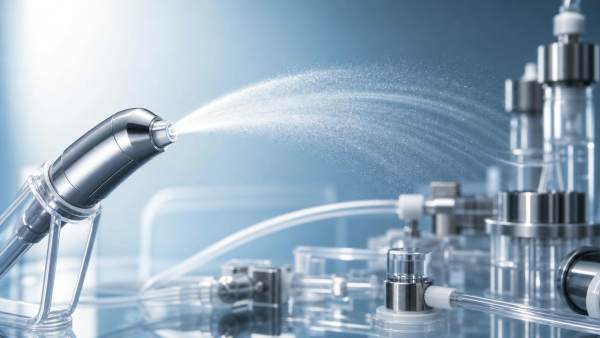
Fluid dynamics in aesthetics may sound technical, yet its value is visible in daily beauty and care routines.
It shapes how serums spread, how water flossers clean, and how energy devices cool, protect, and perform.
For intelligence research, fluid dynamics in aesthetics explains why some devices feel smoother, safer, and more effective than others.
It also connects medical-grade engineering with consumer expectations for anti-aging, comfort, hygiene, and reliable outcomes.
What does fluid dynamics in aesthetics actually mean?
Fluid dynamics studies how liquids and gases move under pressure, speed, resistance, and heat.
In beauty and personal care, that movement influences product delivery, cooling, cleansing, and tissue interaction.
Think of a serum pump, an aerosol spray, a water flosser jet, or airflow from a high-speed dryer.
Each system depends on controlled flow patterns, pressure stability, and contact precision.
Fluid dynamics in aesthetics is not only about movement.
It also affects heat transfer, droplet size, shear force, turbulence, and how energy reaches skin, hair, teeth, or formulas.
When flow is designed well, devices usually deliver better comfort and more predictable performance.
When flow is poorly designed, results may become uneven, wasteful, noisy, or unsafe.
A simple way to picture it
Imagine watering a plant with a hose.
A soft mist suits delicate leaves, while a sharp stream may damage them.
Aesthetic systems work similarly.
The right flow shape matters as much as the liquid, energy source, or treatment ingredient itself.
Where is fluid dynamics in aesthetics used most often?
Fluid dynamics in aesthetics appears across medical aesthetics, home devices, oral care, and automated cosmetic production.
Its role changes by application, but the principle stays the same: controlled movement improves function.
Medical aesthetic optoelectronic devices
Cooling sprays and contact cooling systems protect skin during laser or RF treatments.
Their effectiveness depends on droplet distribution, cooling speed, and stable thermal exchange.
Even suction-assisted systems rely on pressure control and flow response.
Home beauty and anti-aging devices
Microcurrent gels, conductive serums, and infusion heads all depend on smooth fluid contact.
If the gel dries too fast or spreads unevenly, treatment efficiency drops.
Fluid behavior also matters in misting, cleansing, and cooling functions.
Professional personal care appliances
Hair dryers are major examples of air-based fluid engineering.
Air velocity, nozzle geometry, and heat distribution affect drying speed, frizz control, and scalp comfort.
IPL cooling and airflow management also benefit from strong flow design.
High-end oral care appliances
Water flossers are one of the clearest cases of fluid dynamics in aesthetics.
Jet shape, pulse frequency, and pressure decide whether cleaning is gentle and effective or uncomfortable and messy.
Sonic toothbrushes also generate fluid motion around teeth and gums.
Cosmetics automated production lines
Emulsification, homogenization, filling, and sealing all require precise flow control.
Viscosity, mixing speed, bubble control, and shear stability influence product texture and consistency.
Without good fluid engineering, a formula may separate, foam, or fill inaccurately.
Why does fluid dynamics in aesthetics matter for safety and results?
Performance alone is not enough.
Fluid dynamics in aesthetics directly affects comfort, safety margins, repeatability, and device credibility.
It improves treatment precision
Stable flow creates more consistent coverage across skin, hair, teeth, or formulation batches.
That consistency supports clearer treatment protocols and fewer performance surprises.
It helps control heat and friction
Cooling fluids and airflow can reduce overheating during energy-based treatments or high-speed appliance use.
This is especially important in RF, laser, and fast-motor systems.
It supports hygiene and gentle cleaning
In oral care, effective plaque disruption depends on fluid force that reaches small gaps without damaging tissue.
The best systems balance power with control.
It reduces waste
Better atomization and dispensing mean less product loss.
In production lines, accurate filling lowers material waste and quality variation.
How can you judge whether fluid dynamics in aesthetics is well designed?
Many systems look advanced from the outside.
A better evaluation starts with flow behavior, not only branding or power claims.
Look for these practical signals
- Uniform spray, airflow, or liquid output
- Stable pressure across repeated use
- Low splashing, clogging, or bubbling
- Comfortable contact without harsh sensation
- Consistent batch texture in production equipment
- Clear testing data on temperature, force, or particle size
Questions worth asking
Does the flow pattern stay stable as viscosity changes?
Can the device maintain performance after repeated cycles?
Is the system designed for sensitive tissue or heat-prone use?
Are cleaning and maintenance easy enough to preserve flow quality over time?
What are common misunderstandings about fluid dynamics in aesthetics?
Several myths can lead to poor decisions when comparing devices or production systems.
Myth 1: Stronger pressure always means better results
More force can improve speed, but only if geometry and control stay balanced.
Excess pressure may create discomfort, uneven delivery, or tissue stress.
Myth 2: Fluid dynamics matters only in liquids
Air is also a fluid.
Hair dryers, cooling channels, and aerosolized treatments depend on airflow engineering just as much as liquid systems do.
Myth 3: A premium motor guarantees premium flow
Motor speed helps, but nozzle design, chamber structure, and control algorithms are equally important.
A fast motor with weak flow design can still perform poorly.
Myth 4: Lab performance always matches real use
Fluid dynamics in aesthetics can change with temperature, residue buildup, formula thickness, and user technique.
Real-world stability matters as much as controlled testing.
What should be considered before adoption or implementation?
Whether the goal is treatment quality, product development, or process optimization, several factors deserve attention.
Match flow design to the actual use case
Sensitive facial cooling, oral cleaning, and viscous cream filling each need different pressure and flow behaviors.
One flow model never fits every application.
Review maintenance demands
Channels, pumps, nozzles, and valves can drift from ideal performance.
Maintenance plans should include clogging prevention, cleaning cycles, and replacement schedules.
Check compliance and testing evidence
Safety claims should be supported by flow testing, thermal data, and materials compatibility.
This is especially relevant as home beauty devices face tighter scrutiny in many markets.
Balance cost with lifecycle value
A better fluid system may cost more initially.
However, it can lower waste, improve user experience, and reduce performance complaints over time.
FAQ quick-reference table on fluid dynamics in aesthetics
Fluid dynamics in aesthetics is a practical foundation, not an abstract theory.
It explains why advanced devices feel precise, why oral care jets clean better, and why cosmetic filling lines stay stable.
Across the appearance economy, flow engineering quietly supports anti-aging, personal care comfort, and manufacturing excellence.
A useful next step is to review any device or process through a fluid lens.
Look at pressure, direction, uniformity, heat exchange, and maintenance together.
That approach makes fluid dynamics in aesthetics easier to understand and far easier to apply well.
Related Intelligence
- Optoelectronics & Dermal TechAesthetic Equipment Comparison Chart: Treatment Uses, Skin Types, and DowntimeExplore our aesthetic equipment comparison chart to compare treatment uses, skin-type suitability, and downtime. Discover key safety checks and make smarter device purchasing decisions.
- Optoelectronics & Dermal TechChoosing a Collagen Stimulation Device Manufacturer: Evidence and Quality ChecksChoose a collagen stimulation technology manufacturer with confidence. Learn how to verify clinical evidence, regulatory status, production quality, and service before you buy.
- Optoelectronics & Dermal TechAesthetic Device Solutions: What Multi-Treatment Clinics Should EvaluateAesthetic device solutions for multi-treatment clinics: evaluate safety, workflow, versatility, lifecycle costs, and supplier support before investing.
The Morning Broadsheet
Daily chemical briefings, market shifts, and peer-reviewed summaries delivered to your terminal.
