

The Authority in Global Agricultural Chemistry & Bio-Resources
Can thermodynamics in aesthetics improve skin outcomes?
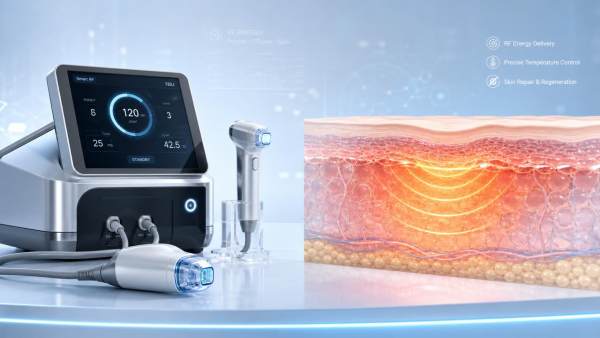
Can thermodynamics in aesthetics truly improve skin outcomes? In practice, the answer depends on controlled heat transfer, calibrated energy delivery, and measurable tissue response across modern aesthetic platforms.
Within medical aesthetics, home beauty devices, oral care systems, and cosmetic equipment, thermodynamics in aesthetics shapes both safety and performance. It influences collagen remodeling, pigment response, comfort, downtime, and treatment consistency.
For intelligence platforms such as AECS, this topic matters beyond theory. It connects optoelectronic physics, fluid behavior, smart control algorithms, and compliance thinking to real-world outcome quality.
Thermodynamics in aesthetics: core definition and operating logic
Thermodynamics in aesthetics refers to how thermal energy is generated, transferred, distributed, and dissipated during beauty and medical-grade skin treatments.
It is not limited to “hotter means better.” Effective systems aim for precise target heating while protecting surrounding tissue and the epidermal barrier.
This principle appears across RF devices, HIFU platforms, lasers, IPL, cooling-assisted handpieces, and even automated cosmetic processing equipment.
When thermodynamics in aesthetics is well managed, energy reaches the intended depth, temperature stays within a therapeutic window, and biological repair pathways activate more predictably.
Key thermal variables that influence skin outcomes
- Peak temperature at the target tissue
- Exposure time and pulse duration
- Energy density and fluence stability
- Heat diffusion to adjacent structures
- Cooling efficiency before, during, or after exposure
- Skin impedance, hydration, and vascular response
These variables explain why two devices with similar marketing claims may produce very different skin outcomes in daily use.
Why the industry focuses on thermodynamics in aesthetics
The appearance economy increasingly rewards visible efficacy, repeatable safety, and shorter recovery time. That makes thermodynamics in aesthetics a central technical discipline.
Medical-grade platforms now compete through thermal precision rather than headline power alone. Home-use systems follow the same path with stricter comfort and safety constraints.
AECS tracks these shifts because thermal behavior often reveals whether innovation is scientifically meaningful or simply cosmetic positioning.
How thermodynamics in aesthetics improves skin outcomes
The clearest benefit is controlled biological stimulation. Skin does not improve from energy alone. It improves from precise tissue responses induced within safe thermal thresholds.
Collagen remodeling and firmness
RF and HIFU systems use thermal effects to trigger collagen contraction and longer-term neocollagenesis. Uniform heating supports tighter, firmer, and smoother-looking skin.
If heat is too shallow, benefits remain limited. If too intense, comfort drops and injury risk rises. Thermodynamics in aesthetics balances this narrow window.
Pigment management and resurfacing
Laser and IPL treatments rely on selective photothermal action. Thermal selectivity helps target melanin or micro-zones while minimizing unnecessary heating of healthy tissue.
Better thermal confinement can mean improved clarity, reduced post-treatment inflammation, and more stable recovery profiles across skin conditions.
Barrier preservation and downtime control
Advanced cooling, pulse modulation, and energy zoning help preserve the epidermis. This supports faster return to routine care and lowers the risk of irritation-related complications.
Representative applications across the broader care ecosystem
Thermodynamics in aesthetics matters across more than clinic procedures. It also influences high-end personal care devices and upstream cosmetic manufacturing quality.
This broader view helps explain why thermodynamics in aesthetics is both a treatment topic and an industrial quality topic.
Business significance for performance, safety, and brand trust
Better thermal engineering improves more than immediate skin outcomes. It can strengthen product differentiation, complaint reduction, and clinical confidence across channels.
Devices that maintain stable temperature curves often show better consistency across sessions. Consistency supports user retention, protocol standardization, and lower variability in results.
For cross-border expansion, thermodynamics in aesthetics also supports documentation. Thermal mapping, safety cutoffs, and energy validation can improve audit readiness and regulatory communication.
- Supports medical-grade positioning through measurable engineering logic
- Reduces the gap between laboratory performance and field use
- Enables smarter software control and adaptive treatment algorithms
- Improves long-term credibility in outcome-sensitive categories
Practical evaluation framework for thermodynamics in aesthetics
A practical review should focus on evidence, not only interface design or headline power specifications.
What to check in device assessment
- Whether target temperature range is clearly defined and validated
- Whether handpiece cooling is active, passive, or algorithmically adjusted
- Whether energy output remains stable across repeated cycles
- Whether different skin conditions affect thermal efficiency
- Whether treatment endpoints are observable and reproducible
Common caution points
- High power without thermal control can increase risk without increasing benefit
- Uneven contact may create hot spots and inconsistent outcomes
- Overheating can worsen inflammation-prone or barrier-weakened skin
- Poor coupling media management may reduce energy transfer efficiency
The best approach to thermodynamics in aesthetics combines hardware design, software feedback, and disciplined treatment protocols.
Next-step perspective for informed implementation
Thermodynamics in aesthetics can improve skin outcomes when energy delivery is specific, measurable, and biologically aligned. Precision heating often matters more than aggressive heating.
In today’s market, stronger thermal intelligence supports visible results, safer experiences, and more reliable product narratives across medical aesthetics and everyday care systems.
A useful next step is to compare thermal architecture, cooling strategy, and validation data across candidate systems. That process turns device claims into clearer performance judgment.
For deeper market observation, AECS provides a structured lens on optoelectronic thermodynamics, fluid dynamics, compliance signals, and equipment evolution shaping the global appearance economy.
Related Intelligence
- Optoelectronics & Dermal TechAesthetic Equipment Comparison Chart: Treatment Uses, Skin Types, and DowntimeExplore our aesthetic equipment comparison chart to compare treatment uses, skin-type suitability, and downtime. Discover key safety checks and make smarter device purchasing decisions.
- Optoelectronics & Dermal TechChoosing a Collagen Stimulation Device Manufacturer: Evidence and Quality ChecksChoose a collagen stimulation technology manufacturer with confidence. Learn how to verify clinical evidence, regulatory status, production quality, and service before you buy.
- Optoelectronics & Dermal TechAesthetic Device Solutions: What Multi-Treatment Clinics Should EvaluateAesthetic device solutions for multi-treatment clinics: evaluate safety, workflow, versatility, lifecycle costs, and supplier support before investing.
The Morning Broadsheet
Daily chemical briefings, market shifts, and peer-reviewed summaries delivered to your terminal.
