

The Authority in Global Agricultural Chemistry & Bio-Resources
Choosing a Collagen Stimulation Device Manufacturer: Evidence and Quality Checks
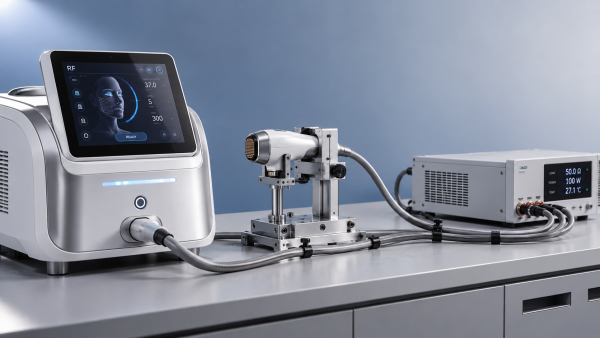
A collagen stimulation device is not a sound purchase simply because its brochure lists high power, multiple treatment depths, or a low factory price. The stronger choice is a manufacturer that can connect the exact device being supplied to credible performance evidence, applicable market authorization, repeatable production controls, and enforceable service commitments.
The critical distinction is between evidence that a technology can produce a biological effect and evidence that a particular commercial system delivers that effect safely and consistently. A published radiofrequency study, an ISO certificate, and a successful demonstration each answer different questions. None substitutes for the others.
Define the intended use before comparing suppliers
“Collagen stimulation” describes a proposed biological response, not a single device category. Noninvasive radiofrequency, RF microneedling, focused ultrasound, and fractional lasers deliver energy differently and introduce different hazards. Their quoted output values are not directly comparable, and evidence from one modality cannot automatically support another.
A useful purchasing specification starts with treatment claims, anatomical sites, intended users, patient population, and operating environment. It should distinguish professional treatment from home use and identify whether the device penetrates the skin. These details influence the evidence required, regulatory pathway, training burden, and ongoing cost.
For example, RF microneedling introduces requirements around needle integrity, penetration control, sterile cartridges, and disposal. Focused ultrasound requires scrutiny of acoustic output and focal characteristics. Noninvasive RF demands close attention to electrical contact, impedance changes, and thermal control. Combining these systems under a generic “anti-aging machine” specification conceals material differences.
Freeze the proposed configuration before requesting final quotations: console, handpieces, cartridges, software version, treatment modes, accessories, and labeling. Otherwise, suppliers may quote superficially similar packages with substantially different evidence coverage and operating costs.
Ask whether the clinical evidence belongs to the quoted device
A credible collagen stimulation technology manufacturer should identify which claims are supported by which evidence. Request a claim-to-evidence matrix linking each proposed indication to the relevant report, device configuration, treatment protocol, measured outcome, and follow-up period.
The strongest evidence is not necessarily the study with the most impressive photographs. It is evidence that is sufficiently rigorous, relevant to the intended use, and traceable to the supplied system. Important questions include:
- Was the exact model studied, including the relevant handpiece and treatment mode?
- Were energy settings, treatment intervals, and operator procedures documented?
- Were outcomes assessed with appropriate validated measures, standardized photography, or independent evaluation?
- Was follow-up long enough to distinguish temporary swelling or contraction from sustained improvement?
- Were adverse events, withdrawals, and the number of treated participants reported clearly?
Histological evidence of collagen remodeling can support a mechanism, but it does not by itself establish a clinically meaningful improvement in wrinkles, laxity, or scars. Conversely, favorable appearance assessments do not prove a specific biological mechanism. The claim being purchased should match the outcome actually measured.
Where studies concern a predecessor model or another manufacturer’s device, request a documented justification for relevance. Changes in electrode geometry, pulse delivery, cooling, focal depth, or software can affect tissue exposure even when the headline technology is unchanged. Similar enclosure design or nominal power does not demonstrate equivalence.
Commercial confidentiality can justify controlled access to detailed reports. It does not justify replacing substantiation with unattributed before-and-after images. Missing evidence should lead to narrower claims, additional evaluation, or exclusion from consideration—not an assumption that all devices using the same modality perform alike.
Verify market access separately from quality certification
Regulatory documentation must match the destination market, intended use, legal manufacturer, and device configuration. A supplier’s general statement that it is “FDA registered” or “CE certified” is insufficient.
In the United States, establishment registration and device listing do not mean FDA approval or clearance. Where a device requires premarket authorization, check the relevant FDA record and compare its indications, manufacturer identity, and device description with the proposed product. A clearance covering one indication does not authorize unrelated marketing claims.
For the European Union, request the applicable declaration of conformity and, where required, notified body documentation. Check the regulatory basis and scope rather than treating a CE logo as proof. Some aesthetic products without an intended medical purpose fall within Annex XVI of the Medical Devices Regulation; applicability depends on the product and its intended purpose. An electrical compliance report alone does not establish compliance with medical-device obligations.
ISO 13485 certification concerns a medical-device quality management system. It is not product authorization and does not prove clinical effectiveness. Verify the certificate’s issuing body, validity, covered sites, and activities. A certificate covering distribution should not be accepted as evidence that the quoted factory’s manufacturing operations are covered.
Private-label sourcing requires particular care. Establish which entity is the legal manufacturer, whose name appears on labeling, and who controls the technical documentation. Branding or specification changes can affect regulatory responsibilities and evidence coverage. These obligations should be resolved before packaging and tooling expenditure.
Test delivered energy, not just displayed settings
A console’s displayed setting is a command, not proof of what reaches the treatment interface. Output consistency depends on calibration, component variation, applicator condition, software control, load characteristics, and protective functions.
Request the manufacturer’s performance specifications, test methods, and acceptance limits. The limits should have an engineering and risk-based justification; there is no universal tolerance suitable for every collagen stimulation device.
Bench testing should use defined, reproducible conditions and calibrated equipment. Tissue-mimicking materials can help compare performance, but they do not reproduce every aspect of living tissue. Ask what each test establishes and what remains dependent on clinical evidence.
For medical electrical equipment, examine applicable electrical safety and electromagnetic compatibility reports, including the relevant IEC 60601 requirements where appropriate. Report coverage should match the model, accessories, and intended environment. Depending on the design, software lifecycle, usability, patient-contact materials, and sterilization evidence may also be relevant. A collection of unrelated test certificates is not a coherent safety case.
Use the factory assessment to test production repeatability
A demonstration unit can be carefully selected and adjusted. The more consequential question is whether routine production produces the same performance and whether failures remain traceable after shipment.
Inspect records that connect incoming components, assembly operations, calibration, final inspection, and release to an individual serial number. For critical parts such as RF generators, ultrasound transducers, temperature sensors, and needle cartridges, determine how supplier approval and component substitutions are controlled.
The audit should also examine how the factory handles nonconforming output. Rejected units, rework instructions, repeat testing, and corrective actions reveal more about control discipline than a clean showroom. Complaint handling should connect field problems to investigation and, when justified, changes in design or production.
Change control is especially important for OEM arrangements. Specify advance notification and review rights for changes to critical components, software, applicators, manufacturing locations, sterilization processes, and regulatory status. A visually identical replacement part can still alter output or invalidate supporting evidence.
Capacity claims need operational support. Review realistic lead times, bottleneck components, outsourced processes, and recovery arrangements for supply interruptions. For consumable-dependent systems, continuity of compatible cartridges may matter more than the availability of replacement consoles.
Build acceptance testing into the purchase agreement
Acceptance should be agreed before a deposit is paid, not negotiated after equipment arrives. The agreement should identify the approved configuration, required documentation, test methods, sampling rationale, acceptance limits, and remedies for failure.
A proportionate approach combines design-level evidence with factory acceptance testing and incoming verification. Not every safety test belongs in routine receiving inspection, and destructive testing may require separately allocated samples. The distinction between type testing, production release testing, and shipment acceptance should be explicit.
Useful contractual requirements include:
- Traceable output and calibration records for supplied units.
- Verification of essential protective functions using approved methods.
- Confirmation of software versions, accessories, labeling, and consumable compatibility.
- Defined handling of discrepancies, retesting, replacement, and associated freight costs.
- Documented approval before substitutions or shipment of a changed configuration.
Payment milestones can then follow objectively verifiable events, such as document acceptance and successful agreed testing. This provides more protection than a general promise that equipment will be “medical grade.” Evaluation units should not be used on people merely to settle purchasing questions; any human use must meet applicable authorization, ethical, and clinical requirements.
Compare cost per usable treatment, not console price
A low acquisition price can be offset by restrictive consumable arrangements, short applicator life, calibration charges, or prolonged downtime. Compare quotations using the same treatment protocol, utilization assumptions, and service period.
A practical model is: total ownership cost divided by expected completed treatments. Total ownership cost should include equipment, freight and import charges, installation, required market-access work, training, maintenance, calibration, software fees, consumables, financing, and disposal where relevant. The treatment denominator should reflect planned downtime and realistic use—not the console’s theoretical maximum throughput.
Cartridge economics require particular scrutiny. Confirm what a quoted shot count means, whether unused capacity expires, how the device counts usage, and whether interrupted treatments consume remaining life. For sterile single-use products, treatment costing must follow the validated use instructions rather than assumptions about reuse.
Compare low-, expected-, and high-utilization scenarios. A platform with a higher purchase price may have a lower cost per treatment under sustained use, while a cheaper platform may be financially preferable at limited volume. These are purchasing calculations, not proof of superior clinical performance.
Service commitments should be equally measurable: response time, remote diagnostic access, parts availability, repair location, loan-unit arrangements, warranty exclusions, and responsibility for shipping. “Lifetime support” has little value without defined deliverables. Establish how long critical parts and consumables will remain available and what happens if the platform is discontinued.
Keep unresolved safety and evidence gaps outside the price negotiation
Supplier comparison works best when mandatory requirements are separated from commercial preferences. Missing market authorization, untraceable clinical claims, inadequate output control, or refusal to disclose critical change procedures should not be compensated for by a discount or attractive payment terms.
Once those gates are satisfied, price, delivery, usability, and service can be compared meaningfully. The defensible choice is the manufacturer whose supplied configuration, evidence, production records, and contractual commitments align—and whose remaining uncertainties are explicit enough to price and manage before the order is placed.
Related Intelligence
- Optoelectronics & Dermal TechAesthetic Equipment Comparison Chart: Treatment Uses, Skin Types, and DowntimeExplore our aesthetic equipment comparison chart to compare treatment uses, skin-type suitability, and downtime. Discover key safety checks and make smarter device purchasing decisions.
- Optoelectronics & Dermal TechChoosing a Collagen Stimulation Device Manufacturer: Evidence and Quality ChecksChoose a collagen stimulation technology manufacturer with confidence. Learn how to verify clinical evidence, regulatory status, production quality, and service before you buy.
- Optoelectronics & Dermal TechAesthetic Device Solutions: What Multi-Treatment Clinics Should EvaluateAesthetic device solutions for multi-treatment clinics: evaluate safety, workflow, versatility, lifecycle costs, and supplier support before investing.
The Morning Broadsheet
Daily chemical briefings, market shifts, and peer-reviewed summaries delivered to your terminal.
