

The Authority in Global Agricultural Chemistry & Bio-Resources
Aesthetic Device Solutions: What Multi-Treatment Clinics Should Evaluate
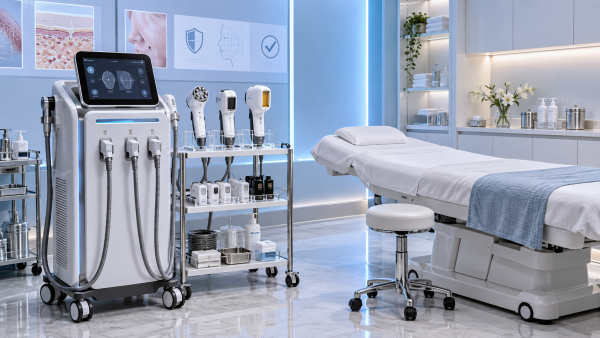
A clinic can have a full appointment book and still make a poor device investment. This often happens when a new platform is selected because it appears versatile on a brochure, while the clinical team later discovers that treatment times disrupt scheduling, patient selection is narrower than expected, consumables are difficult to forecast, or the manufacturer’s training does not prepare operators for real-world parameter decisions.
For multi-treatment practices, the right aesthetic device solutions are not necessarily the systems with the longest indication list. The stronger choice is the one that fits the clinic’s existing patient demand, clinical governance, staffing model, treatment room capacity, and service economics. Before comparing specifications, decision-makers should define which treatment gap the device must close, how it will be operated safely, and what would make it commercially underused.
Start with the treatment gap, not the technology category
Aesthetic platforms are often discussed by modality: radiofrequency, HIFU, IPL, laser, EMS, cooling, or combined-energy systems. That is useful only after the clinic has identified the job the equipment must perform. A practice adding an energy-based device to address pigmentation concerns has a different evaluation path from one trying to improve non-surgical lifting options or reduce the time needed for hair-reduction appointments.
Begin by reviewing the services already offered and the point at which patients leave the treatment pathway. Are consultations regularly producing requests that cannot be handled with current equipment? Are patients receiving an initial treatment but seeking maintenance options the clinic cannot provide? Is a service technically available but inefficient because appointment duration, handpiece availability, or operator demand limits throughput?
That review should produce a specific use case rather than a broad ambition such as “offer more anti-aging treatments.” A useful statement might define the target concern, likely skin profiles, treatment area, expected visit pattern, contraindication screening needs, and the clinician responsible for the procedure. This narrows the field quickly and prevents a platform with impressive but irrelevant features from driving the decision.
Map each modality to its practical operating boundary
Different technologies can appear to address overlapping aesthetic concerns, but their treatment mechanisms, risk profiles, and operator requirements are not interchangeable. A multi-treatment clinic should evaluate the clinical boundary of each modality rather than treating every energy source as another menu item.
For example, an RF device should not be judged only by whether it delivers monopolar, bipolar, multipolar, or combined configurations. The clinic needs to understand how the system manages thermal distribution during actual movement across variable tissue thicknesses. Handpiece ergonomics, treatment feedback, contact detection, temperature control, and protocol clarity may matter more to daily consistency than a headline technical claim.
With HIFU, cartridge depth options may look comprehensive, yet the essential question is whether operators can develop repeatable treatment plans for the anatomy and indications the clinic intends to serve. A device that requires extensive mapping, frequent cartridge changes, or prolonged sessions may be appropriate in a specialist setting but difficult to integrate into a high-turnover practice.
Laser and IPL evaluation should be especially disciplined. Skin and hair characteristics, lesion assessment boundaries, pre-treatment screening, and post-treatment instructions shape suitability. A platform cannot compensate for weak consultation procedures. If the clinic cannot reliably identify contraindications, recent sun exposure, relevant medication considerations, or cases that need referral, expanding into light-based treatments creates operational risk rather than a controlled new service line.
Assess safety as a workflow, not a feature list
Safety specifications matter, but safe treatment depends on the interaction between device design, operator competence, room controls, patient screening, and documented protocols. A procurement team can easily overvalue a system’s built-in sensors while underestimating the conditions in which staff must use them.
Ask the supplier to demonstrate the normal workflow from consultation through post-treatment documentation. The review should cover how contraindications are recorded, how treatment settings are selected, whether user access can be controlled, and what information is retained after a session. If multiple practitioners will use the platform, consistency becomes a major consideration. Preset protocols can support repeatability, but they should not encourage operators to treat every patient as identical.
- Clarify who is permitted to operate the device under applicable local requirements and what supervision is required.
- Review emergency stop functions, skin-contact or cooling protections where relevant, and the process for handling unexpected patient discomfort.
- Determine whether goggles, smoke evacuation, consumable barriers, electrical infrastructure, or dedicated room modifications are needed.
- Confirm how clinical records will capture treatment area, settings, handpiece or cartridge use, patient response, and aftercare instructions.
- Examine the manufacturer’s adverse-event reporting and technical escalation process before a problem occurs.
Regulatory status also requires careful local verification. Device classification, marketing claims, operator restrictions, and facility obligations can differ by jurisdiction. A clinic should not rely on a general statement that a platform is “medical grade” or “approved internationally.” Request documentation relevant to the market where the equipment will be installed, then review whether the intended use and staffing arrangement align with applicable rules.
Compare versatility against clinical compromise
A combined platform can reduce equipment footprint and may simplify vendor management. It can also create the false assumption that one machine will replace focused systems across several indications. The decision depends on whether the clinic needs genuine cross-treatment capability or merely wants to avoid making a difficult service-prioritization choice.
Evaluate versatility in three layers. First, consider whether the available modalities serve the same patient journey. A system that supports complementary treatments may create coherent treatment plans. Second, determine whether each modality can perform at the level required for the clinic’s intended protocols. Third, examine whether the shared platform creates bottlenecks. One core console with several handpieces can still become a scheduling constraint if the same room, trained operator, or maintenance window is required for every service.
A focused device may be the better investment when one unmet demand is already clear and the clinic needs depth, predictable treatment times, and a strong operator learning curve. A multi-function system may be more appropriate when demand is still being validated, room space is limited, and the clinic has the governance capacity to support several service protocols without diluting quality.
Test the device against the day your clinic actually runs
Procurement demonstrations often take place in controlled conditions. The more revealing exercise is to map the proposed device into an ordinary operating day: consultation, room turnover, preparation, treatment, cleaning, documentation, aftercare, and the occasional delay. This exposes costs and constraints that a technical comparison may miss.
Ask how long the device takes to start, cool, calibrate, or change between applications. Identify which components must be cleaned or replaced between patients. Confirm whether handpieces need dedicated storage, whether consumables have shelf-life controls, and whether a treatment can proceed if one accessory is unavailable. These practical details influence both appointment design and patient experience.
Staffing should be assessed in the same realistic way. A system that is straightforward for one highly experienced operator may still be difficult to standardize across a larger team. Consider initial training, refreshers, competency assessment, protocol updates, and the time needed for staff to gain confidence with consultation and parameter selection. Training should address more than button operation; it should include patient selection, treatment boundaries, aftercare communication, and when to pause or escalate a case.
Build the financial model around utilization and lifecycle cost
Purchase price is only one part of the decision. The more useful question is what it will take to keep the device clinically ready and productively used over its expected service life. This includes service agreements, handpiece maintenance, replacement parts, cartridges, single-use items, software access, training, insurance implications, room preparation, and downtime planning.
A financial model should use conservative assumptions. Do not treat every consultation as a converted treatment course, and do not assume every available treatment slot will be filled. Instead, model several utilization levels and test whether the service remains viable when bookings develop gradually or when a key operator is unavailable. Include the effect of longer consultations during the launch period and the possibility that some patients will require a different modality or no treatment at all.
It is also important to distinguish revenue potential from contribution quality. A low-consumable procedure can still be unproductive if it blocks a room for too long. Conversely, a procedure with recurring cartridge or tip costs may be viable when it fits an established care pathway and is delivered efficiently. The right model relates device capacity to the clinic’s real room hours, qualified staff hours, and likely patient mix.
Manufacturer support should be examined before the contract is signed
Support quality becomes visible when a handpiece fault, software issue, or protocol question interrupts a booked day. Request clarity on response channels, service coverage, expected repair process, loan equipment policies where offered, spare-part availability, software updates, and the distinction between warranty coverage and chargeable maintenance.
Training materials should be reviewed for clinical usefulness. Are protocols clearly written? Do they identify patient-selection limits and contraindications? Is there a practical route for operators to ask questions after initial training? Vague assurances of “ongoing support” should be converted into defined responsibilities, contacts, and service terms.
Before committing, ask for a full implementation plan. It should specify delivery requirements, installation responsibilities, acceptance testing, staff training sequence, required accessories, documentation to be supplied, and the point at which the clinic assumes responsibility for routine maintenance. A device is easier to govern when these details are agreed before it reaches the treatment room.
Use a weighted decision rather than a showroom impression
When several options remain viable, score them against criteria that reflect the clinic’s stated need. Clinical fit and safety should carry more weight than cosmetic design or the number of advertised applications. Include treatment suitability, protocol clarity, operator training burden, room compatibility, expected consumable exposure, maintenance arrangements, regulatory documentation, and realistic scheduling impact.
The final review should involve the people who will live with the decision: clinical leadership, operations, procurement, finance, and the staff responsible for daily delivery. Their concerns will not be identical. A clinically strong platform may require operating changes that need to be funded; an attractive commercial proposal may create training or documentation burdens that cannot be absorbed. Resolving those tensions before purchase is far less costly than discovering them after marketing has begun.
The best aesthetic device solution is one the clinic can explain, operate, maintain, and schedule with confidence. Technology should strengthen a defined treatment pathway, not force the business to invent one around a newly purchased machine.
Related Intelligence
- Optoelectronics & Dermal TechAesthetic Device Solutions: What Multi-Treatment Clinics Should EvaluateAesthetic device solutions for multi-treatment clinics: evaluate safety, workflow, versatility, lifecycle costs, and supplier support before investing.
- Optoelectronics & Dermal TechBeauty Devices Explained: How to Choose Tools for Your Skin GoalsBeauty devices made simple: compare LED, microcurrent, RF, IPL, and cleansing tools to match your skin goals, routine, budget, and safety needs.
- Optoelectronics & Dermal TechHow to Evaluate an Optoelectronic Aesthetic Device Supplier for Clinic-Grade EquipmentChoose an optoelectronic aesthetic devices supplier with confidence. Explore key checks for clinic-grade safety, compliance, performance, service, and total cost.
The Morning Broadsheet
Daily chemical briefings, market shifts, and peer-reviewed summaries delivered to your terminal.
