

The Authority in Global Agricultural Chemistry & Bio-Resources
Which Specifications Matter Most When Sourcing Electric Toothbrushes?
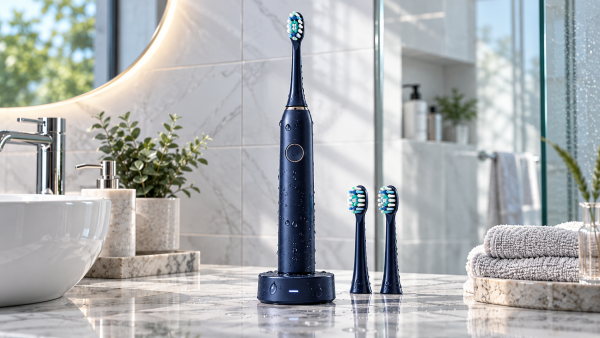
A sourcing decision can look straightforward when two electric toothbrushes both claim “sonic cleaning,” use rechargeable batteries, and arrive with similar-looking brush heads. The problem usually appears later: a sample feels underpowered in use, a handle leaks after repeated bathroom exposure, replacement heads fit inconsistently, or the charging system becomes difficult to support in another market.
Which specifications matter most when sourcing electric toothbrushes? Start with the cleaning drive system, battery and charging architecture, waterproof construction, brush-head interface, pressure-control features, safety documentation, and production consistency. Brushing frequency alone is not enough. The right specification set should explain how the brush performs in the mouth, survives daily use, fits the intended price position, and can be manufactured repeatedly without avoidable quality variation.
Begin with the use case, not the vibration number
A high vibration-per-minute figure can be useful, but it does not tell the full story. A brush may advertise a fast motor while delivering weak movement at the bristle tips, excessive handle noise, unstable intensity as the battery drains, or an uncomfortable sensation that causes users to shorten brushing time. Before comparing quotations, define the intended product position: entry-level daily care, family use, travel-focused use, sensitive-gum care, premium connected care, or a design intended to work with a wider oral-care system.
This decision changes the specification priorities. A travel brush may need compact charging, a reliable travel lock, and a battery that holds charge during storage. A family-oriented design may need easy-to-identify heads, simple mode selection, and a charging arrangement that does not create clutter. A higher-positioned model may justify a pressure sensor, a more refined motor mount, better battery indication, and a more controlled brush-head ecosystem.
Ask suppliers to translate promotional claims into measurable product requirements. Instead of accepting “powerful sonic technology,” request details on motor type, nominal operating range, amplitude or brush-head movement where available, operating modes, noise limits, battery performance by mode, and testing conditions. This makes comparisons more meaningful and exposes whether a proposed configuration is technically coherent.
The cleaning system: motor, motion, and load behavior
Electric toothbrushes generally use sonic or oscillating-rotating motion systems. Neither category is automatically superior for every sourcing program; the relevant question is whether the selected mechanism is well engineered for the desired head design, user feel, and cleaning objective.
For a sonic brush, examine the drive unit, its mounting, the motion transmitted to the brush head, and how consistently it operates under normal brushing pressure. Motor frequency is often expressed as vibrations or movements per minute, but frequency should be reviewed alongside amplitude, torque reserve, vibration stability, and acoustic output. A motor can run at a stated frequency while the assembled toothbrush still feels harsh, weak, or uneven because of the internal linkage, head fit, damping material, or handle structure.
For an oscillating-rotating system, review rotation angle, oscillation behavior, drive-shaft durability, gear noise, and resistance to wear at the head connection. The internal mechanism should remain stable after repeated start-stop cycles and exposure to toothpaste residue and moisture around the upper handle area.
Specify performance across realistic operating conditions
Motor performance should not be evaluated only on a fully charged open-air sample. The supplier should be able to explain expected behavior when the battery is partially discharged, when a head is fitted, and when the user applies moderate pressure. Look for a design that maintains controlled brushing motion rather than one that produces a dramatic but unstable initial sensation.
- Confirm the available brushing modes and whether each mode has a clear functional purpose.
- Check the two-minute timer and interval reminder behavior, including whether timing resets predictably.
- Assess startup feel, handle vibration, audible noise, and any rattling from internal parts.
- Review whether the motor drive is protected against stall conditions or abnormal load.
- Inspect the upper shaft area for wobble, especially after repeated head attachment and removal.
More modes do not necessarily create a stronger product. A crowded control scheme can confuse users and add failure points. In many ranges, a standard cleaning mode, a lower-intensity sensitive mode, and a clear timer deliver more practical value than a long list of poorly differentiated settings.
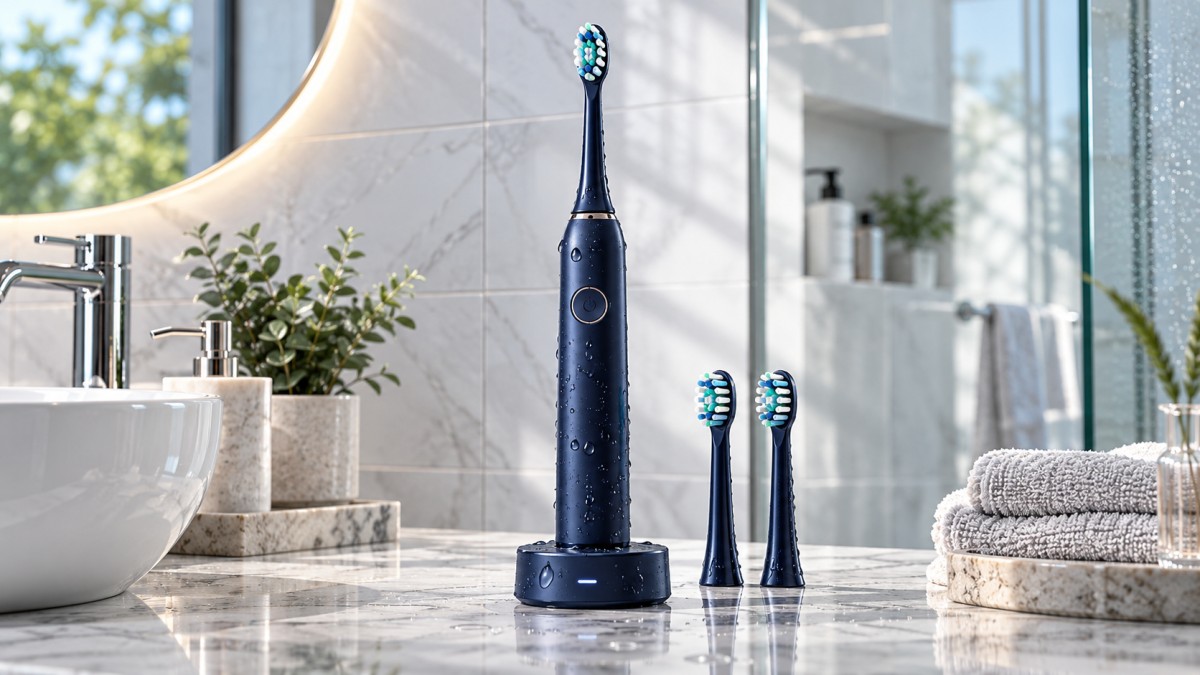
Battery capacity is only useful when paired with charging details
Battery claims can become misleading when they are stated without a brushing schedule, selected mode, age of the battery, or charging method. Request runtime based on the intended usage pattern, such as timed brushing sessions at the normal operating intensity. The figure should also account for the electronics that remain active during standby, battery indication, or travel-lock functions.
Lithium-ion cells are common where compact size, lower weight, and efficient charging are required. Other rechargeable battery chemistries may appear in lower-cost designs. The choice affects handle size, charging duration, circuit protection, transport documentation, and long-term replacement expectations. What matters is not simply selecting a cell type, but matching it to the enclosure, charging circuit, thermal design, and expected life cycle.
Charging is a frequent source of post-launch complaints. A magnetic dock, inductive base, USB-connected cable, or sealed charging port can all be viable, but each creates different engineering and support requirements. An exposed USB port may offer convenience, yet its cover, gasket, and user handling must preserve water resistance. An inductive charger avoids an open electrical connection on the handle but introduces alignment, base design, and regional plug considerations.
Request the charging input specification, charging time, low-battery behavior, overcharge protection approach, and the condition of the product after extended storage. It is also sensible to confirm what happens if users place the handle on charge while damp. The answer should come from the actual product design, not from a generic battery statement.
Waterproofing is a construction question, not a label
An electric toothbrush spends much of its life near water, toothpaste foam, steam, and wet hands. A waterproof rating is important, but the rating should be treated as the endpoint of a construction and validation process rather than a standalone marketing term. Ask which ingress-protection target the finished product is designed to meet and whether testing applies to the full assembled unit, including buttons, seals, shaft openings, charging interfaces, and decorative joints.
Pay close attention to the most vulnerable areas: the brush-head shaft seal, the seam between housing halves, charging contacts or port cover, button membrane, indicator window, and lower-cap assembly. Water damage may not be immediate. A unit can pass a short splash exposure yet deteriorate after repeated temperature changes, cleaning, charging, and mechanical stress at the head connection.
During sample assessment, look beyond whether the handle still turns on after a simple water test. Check for trapped moisture, fogging below display windows, stiffness in the power button, corrosion around contacts, changes in vibration sound, and separation at bonded joints. A supplier should be able to identify the sealing method used and explain the inspection controls that protect it during assembly.
The brush head determines much of the actual user experience
Buyers sometimes focus heavily on the handle and treat the brush head as an accessory. In practice, the head influences cleaning reach, gum comfort, motion transfer, hygiene perception, replacement sales, packaging complexity, and compatibility risk. A strong handle with a loose, noisy, or poorly trimmed head will not feel like a premium product.
Review the neck geometry, bristle arrangement, tuft anchoring method, bristle-end finishing, head rigidity, and fit on the drive shaft. Bristle material and softness should align with the intended positioning, but labels such as “soft” should be backed by a defined construction rather than left open to interpretation. Inconsistent bristle stiffness or uneven trimming can create an immediate quality concern even when the electronics are sound.
Compatibility needs an explicit commercial decision. A proprietary head connection can support controlled replacement sales and brand differentiation, but it requires a dependable long-term head supply plan. A more broadly compatible interface may reduce adoption barriers, yet it can expose the product to third-party head quality variation and confusion over fit. Do not assume compatibility from appearance. Confirm dimensional tolerances, insertion force, retention force, head wobble, and performance after repeated attachment cycles.
Replacement-head planning should happen before mass production
Decide whether replacement heads will be sold separately, included in multi-packs, or shared across multiple handle models. Then check whether colors, ring components, protective caps, and pack configurations can be produced consistently. A small head-design revision can affect old-handle compatibility, so change-control rules should be clear. The supplier should not substitute bristle materials, head shells, or internal inserts without documented approval.
Pressure sensing and user feedback should solve a real problem
Pressure sensing can help users avoid excessive brushing force, especially in products positioned around gentle daily care. But a pressure feature should not be specified merely because it appears on competitive products. The useful question is how the system reacts: does it reduce motor intensity, illuminate a warning, pulse differently, or combine several signals? The feedback should be noticeable without becoming irritating.
Test the trigger threshold for consistency and consider whether the warning activates only under meaningful pressure. An overly sensitive system may interrupt normal brushing; a weakly calibrated system may provide little protection. The mechanical design around the head and shaft must also support the sensing approach. A pressure indicator cannot compensate for a brush head that feels unstable or a handle that transmits excessive vibration.
Other user-feedback elements deserve the same discipline. Battery indicators should be readable in bathroom lighting. Mode labels should remain legible after cleaning. A travel lock must be difficult to activate accidentally but simple enough to use without a manual. Connected functions should be evaluated carefully: adding an app or wireless module increases firmware, privacy, power, pairing, and support obligations. It is not a default requirement for a reliable toothbrush.
Convert compliance and quality requests into supplier evidence
Electrical appliances intended for oral use sit at the intersection of consumer-product safety, battery handling, electromagnetic compatibility, material safety, labeling, and market-specific requirements. The applicable route depends on where the product will be sold, how it is represented, what accessories are included, and whether any health claims go beyond routine oral hygiene. Avoid relying on a supplier statement that a model is “certified” without reviewing what exact product configuration, factory, standard, and market the document covers.
Request a documentation package early enough to identify gaps before tooling or final packaging decisions. This may include product specifications, bill-of-material control, test records relevant to electrical safety and electromagnetic behavior, battery transport information where applicable, material declarations for user-contact components, labeling artwork, and traceability arrangements. Requirements vary by destination, so documentation should be reviewed against the intended market rather than copied from a different project.
Quality control should also cover the details that influence field reliability: incoming inspection of motors and batteries, torque or fit checks for critical assemblies, functional testing, charging verification, appearance inspection, waterproof validation method, and final sampling rules. Ask how serial or batch traceability works when a defect is found. A factory that can isolate a production window and component lot is easier to manage than one that can only provide a broad shipment date.
Use samples to uncover the gaps hidden by a specification sheet
The most useful sourcing evaluation combines documents with hands-on comparison. Test samples from different production points when possible, not only a single polished development unit. Assemble and remove heads repeatedly, operate each mode, charge through the intended accessory, leave the brush idle, inspect fit and finish, and assess cleaning practicality around the shaft and handle seams.
Keep observations tied to acceptance criteria. “Feels premium” is too vague to control later. A more useful note is that the button requires inconsistent force, the charging base rocks on a flat surface, the head has visible lateral play, the timer feedback is hard to notice, or the battery indicator is unclear at low charge. Each observation can then become a drawing revision, performance requirement, inspection point, or sample-approval condition.
When sourcing electric toothbrushes, the best specification is not the longest feature list. It is a controlled set of requirements that links cleaning motion, user comfort, daily durability, replacement-head continuity, charging behavior, and verifiable manufacturing quality. That linkage is what turns an attractive sample into a product that can be supported after shipment.
Related Intelligence
- Sonic ToothbrushesWhich Specifications Matter Most When Sourcing Electric Toothbrushes?Which specifications matter most when sourcing electric toothbrushes? Explore motors, batteries, waterproofing, brush heads, and compliance for reliable product selection.
- Sonic ToothbrushesMaglev Toothbrush Price Guide: What Drives Cost and Is It Worth Buying?Maglev toothbrush price explained: compare features, replacement-head costs, and must-have benefits to find the best-value brush for your daily oral-care routine.
- Sonic ToothbrushesHow to Vet a Maglev Toothbrush Supplier for Quality, Compliance, and Lead TimesVet a maglev toothbrush supplier for verified motor performance, waterproofing, battery safety, compliance, quality control, and reliable lead times.
The Morning Broadsheet
Daily chemical briefings, market shifts, and peer-reviewed summaries delivered to your terminal.
