

The Authority in Global Agricultural Chemistry & Bio-Resources
Why dermal heating technology needs precise control
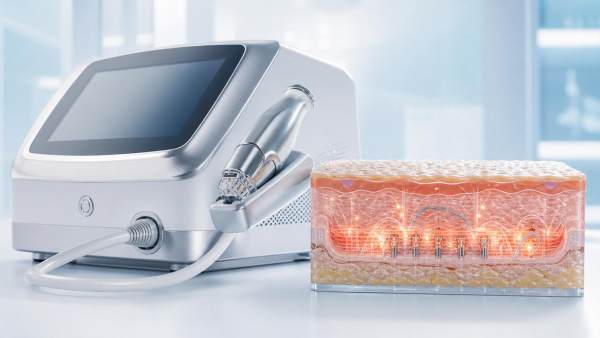
In aesthetic and personal care systems, dermal heating technology is only as effective as its ability to deliver energy with measurable precision.
For technical evaluators, the key question is not simply whether RF, HIFU, or laser-based platforms can raise tissue temperature.
The real question is whether they can maintain controlled thermal profiles that stimulate collagen while avoiding burns, uneven outcomes, or compliance risks.
Understanding why precise control matters is essential for assessing device safety, treatment consistency, and long-term commercial credibility.
What does precise control mean in dermal heating technology?
Precise control means delivering thermal energy to a defined tissue depth, for a defined time, within a defined temperature window.
In dermal heating technology, this window often separates useful collagen remodeling from pain, erythema, or unintended thermal injury.
RF devices, HIFU platforms, IPL systems, and laser-assisted devices heat tissue through different physical mechanisms.
Yet they all share one engineering challenge: energy must be predictable after it enters living tissue.
Skin is not a uniform material. Hydration, melanin, thickness, impedance, and vascularity vary across faces and body areas.
That variability explains why dermal heating technology needs closed-loop monitoring, stable power delivery, and intelligent treatment protocols.
A system that only displays output wattage is not necessarily controlling delivered heat at the target layer.
Useful control combines sensors, algorithms, applicator design, contact quality, cooling, and operator guidance.
Why is temperature accuracy so critical for collagen stimulation?
Collagen response depends on temperature, exposure time, and the spatial distribution of heat.
If dermal heating technology delivers insufficient heat, the biological signal may be too weak for visible firmness improvement.
If heat rises too aggressively, the risk shifts toward burns, swelling, pigment change, or patient dissatisfaction.
This is why thermal dose matters more than a simple “high power” claim.
Controlled dermal heating technology aims to create a repeatable zone of therapeutic heat without overheating the epidermis.
For RF, impedance changes can alter current flow during treatment. For HIFU, focal accuracy affects depth and intensity.
For laser and IPL platforms, chromophore absorption and skin type influence how heat is converted and distributed.
Therefore, a credible system should show how it measures, estimates, or limits thermal exposure.
Clinical value improves when energy delivery is stable across sessions, cartridges, handpieces, and treatment zones.
Key indicators of reliable thermal control
- Real-time temperature sensing or validated thermal estimation.
- Impedance monitoring for RF-based dermal heating technology.
- Consistent energy output across repeated pulses.
- Epidermal cooling that does not hide excessive deep heating.
- Treatment presets matched to tissue type and application area.
Which applications rely most on controlled dermal heating technology?
Controlled dermal heating technology appears across professional aesthetics, home beauty devices, and hybrid personal care systems.
In clinic-grade anti-aging platforms, it supports skin tightening, wrinkle reduction, contour refinement, and collagen remodeling.
In home RF devices, precise limits are even more important because use conditions are less controlled.
Everyday users may treat dry skin, move too slowly, overlap areas, or ignore sensitivity signals.
This makes automatic power adjustment and contact detection essential for safer dermal heating technology.
In oral, hair, and personal care appliances, adjacent lessons also matter.
Smart hair dryers use temperature algorithms to protect fibers and scalp. Sonic oral care uses fluid dynamics to improve cleaning consistency.
The same principle applies to dermal heating technology: performance depends on controlled interaction with biological surfaces.
Automated cosmetics manufacturing also reflects this logic, because emulsification and filling require stable thermal and fluid parameters.
Across the appearance economy, precision is not decorative. It is the foundation of repeatable quality.
How do RF, HIFU, and laser systems differ in heating control?
Different platforms control heat through different pathways, so evaluation cannot rely on one universal specification.
RF-based dermal heating technology uses electromagnetic current to generate heat through tissue resistance.
Its control depends on electrode geometry, frequency, coupling medium, impedance feedback, and contact uniformity.
HIFU concentrates acoustic energy at selected depths. Its precision depends on focal geometry, cartridge quality, and positioning accuracy.
Laser and IPL platforms depend on optical absorption, wavelength selection, pulse duration, and epidermal protection.
Each modality can be effective, but each can fail when control logic is weak.
A strong dermal heating technology platform explains not only energy output, but how energy is shaped inside tissue.
What safety and compliance risks appear when control is weak?
Weak control creates both clinical and commercial risk.
A device may appear powerful during demonstrations, but unstable performance can damage brand trust after repeated use.
For dermal heating technology, the most visible safety problems include burns, blistering, prolonged redness, and post-inflammatory hyperpigmentation.
Less visible problems include undertreatment, asymmetry, inconsistent results, and user abandonment.
Regulatory pressure is also increasing as home beauty devices move closer to medical-device classification in several markets.
This means dermal heating technology must be supported by risk analysis, usability testing, labeling, and post-market monitoring.
Claims such as “medical-grade,” “collagen regeneration,” or “clinical lifting” require careful evidence alignment.
A responsible product file should connect design controls with real safety protections.
Common control-related mistakes
- Equating peak power with treatment quality.
- Ignoring skin impedance changes during RF use.
- Using presets that do not reflect anatomical differences.
- Relying on surface cooling without deep thermal validation.
- Treating consumer comfort as a substitute for objective safety data.
How should a high-quality dermal heating technology platform be evaluated?
Evaluation should begin with the intended use, target tissue depth, user environment, and claimed outcome.
A professional system may prioritize deeper energy delivery and procedural flexibility.
A home system should prioritize locked safety limits, intuitive guidance, and automatic compensation.
For dermal heating technology, the most useful questions are practical rather than promotional.
Can the platform detect poor contact? Can it adjust output when tissue response changes?
Does it document energy consistency across batches, cartridges, and treatment heads?
Can its claims survive technical review, regulatory review, and long-term user feedback?
These questions reveal whether dermal heating technology is engineered for sustainable value or short-term marketing impact.
What implementation factors affect cost, cycle, and market credibility?
Precise control increases engineering complexity, but it also reduces downstream failure cost.
Sensors, firmware, calibration, safety circuits, and validation testing may extend development cycles.
However, weak dermal heating technology often creates higher costs through complaints, returns, redesign, or regulatory delays.
The strongest development approach integrates thermodynamics, electronics, industrial design, and human-factor testing early.
Handpiece ergonomics influence movement speed. Surface materials influence coupling. Firmware influences dose consistency.
No single component can guarantee safe dermal heating technology alone.
Commercial credibility also depends on transparent documentation.
Markets increasingly reward devices that combine visible results with evidence-based safety design.
Practical development reminders
- Define the target thermal endpoint before designing marketing claims.
- Validate heating patterns across skin types, locations, and use behaviors.
- Build safeguards for overlap, poor contact, and excessive session duration.
- Align instructions, app guidance, and packaging with real device limitations.
- Monitor post-market feedback to refine dermal heating technology performance.
FAQ: quick answers about dermal heating technology
Conclusion: precision turns heat into trusted performance
Dermal heating technology sits at the intersection of physics, biology, compliance, and consumer expectation.
Its value comes from creating useful heat, not merely generating energy.
Precise control protects tissue, improves repeatability, supports credible claims, and strengthens long-term market trust.
The next practical step is to review any platform through thermal evidence, safety logic, protocol design, and compliance readiness.
When dermal heating technology is engineered with measurable control, anti-aging innovation becomes safer, smarter, and commercially durable.
Related Intelligence
- Optoelectronics & Dermal TechAesthetic Equipment Comparison Chart: Treatment Uses, Skin Types, and DowntimeExplore our aesthetic equipment comparison chart to compare treatment uses, skin-type suitability, and downtime. Discover key safety checks and make smarter device purchasing decisions.
- Optoelectronics & Dermal TechChoosing a Collagen Stimulation Device Manufacturer: Evidence and Quality ChecksChoose a collagen stimulation technology manufacturer with confidence. Learn how to verify clinical evidence, regulatory status, production quality, and service before you buy.
- Optoelectronics & Dermal TechAesthetic Device Solutions: What Multi-Treatment Clinics Should EvaluateAesthetic device solutions for multi-treatment clinics: evaluate safety, workflow, versatility, lifecycle costs, and supplier support before investing.
The Morning Broadsheet
Daily chemical briefings, market shifts, and peer-reviewed summaries delivered to your terminal.
