

The Authority in Global Agricultural Chemistry & Bio-Resources
Where non-invasive skin treatment technology is heading
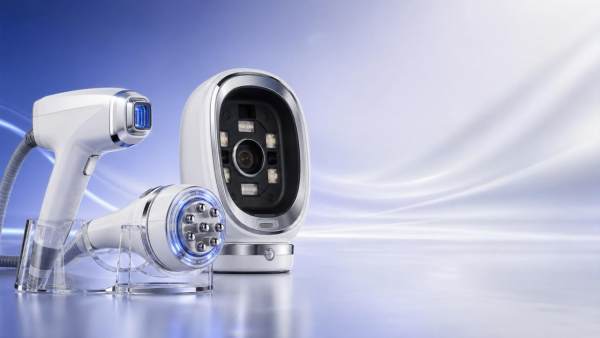
Where is non-invasive skin treatment technology heading next—and what does that mean for growth strategy, product design, and capital allocation? The answer lies in a fast convergence of clinic-grade energy systems, intelligent home devices, digital diagnostics, and stricter compliance expectations.
Across the appearance economy, non-invasive skin treatment technology is moving beyond simple anti-aging claims. It is becoming more measurable, more personalized, and more integrated with medical-grade safety logic, thermal control, and data-driven treatment planning.
For the wider beauty, healthcare, and equipment ecosystem, this shift affects device roadmaps, supply chains, software layers, regulatory positioning, and consumer trust. A checklist approach helps separate durable trends from short-lived market noise.
Why a checklist matters in evaluating non-invasive skin treatment technology
The market now spans lasers, HIFU, RF, EMS, IPL, ultrasound imaging support, cooling systems, and sensor-assisted home devices. Not every launch reflects real technical progress. Some are marketing upgrades wrapped around old engineering.
A structured review of non-invasive skin treatment technology reduces that confusion. It clarifies whether innovation is truly improving tissue selectivity, safety margins, treatment comfort, repeatability, and lifetime commercial value.
Core checklist: how to judge where the technology is heading
- Prioritize energy precision by checking pulse control, thermal spread, depth targeting, and feedback stability rather than relying on broad claims about tightening, brightening, or rejuvenation.
- Verify safety architecture through cooling design, skin contact sensing, impedance monitoring, over-temperature protection, and automatic shutdown logic under abnormal operating conditions.
- Assess personalization features such as skin tone recognition, treatment mapping, adaptive power curves, and user-specific protocols that reduce risk while improving visible consistency.
- Examine clinical relevance by reviewing endpoint data, treatment intervals, pain scores, downtime reduction, and whether outcomes align with realistic skin biology instead of exaggerated timelines.
- Compare professional and home-use pathways to see whether clinic technology can be safely miniaturized without losing too much efficacy or creating compliance exposure.
- Study software intelligence, including treatment logging, firmware updates, guided protocols, and connected diagnostics that improve usability and support long-term device value.
- Review component economics by analyzing laser sources, transducers, RF electrodes, brushless motors, cooling modules, and consumable dependence across different price bands.
- Track regulatory classification because the future of non-invasive skin treatment technology depends increasingly on whether products are treated as beauty devices or medical devices.
- Measure manufacturability by checking calibration complexity, yield stability, enclosure thermal management, and supply resilience for optics, electronics, and precision plastics.
- Validate brand defensibility through patents, treatment know-how, safety documentation, and post-market service systems rather than relying only on influencer-driven demand.
Where non-invasive skin treatment technology is moving in real applications
Clinic-grade facial rejuvenation
In clinics, the direction is toward more selective energy delivery and less collateral damage. Picosecond lasers, fractional systems, and advanced HIFU platforms are being refined to improve lifting, pigment correction, and texture recovery with shorter downtime.
The next frontier is multimodal treatment logic. Instead of using one modality for every concern, platforms increasingly combine optical, thermal, and mechanical stimulation to match layers of the skin more precisely.
Home-use anti-aging devices
At home, non-invasive skin treatment technology is heading toward intelligent simplification. RF and microcurrent devices are becoming easier to operate, but the real innovation lies in embedded safeguards and repeatable, low-risk protocols.
This category will grow where engineering supports trust. Consumers increasingly expect clinic-inspired efficacy, but they also expect sensors, app guidance, ergonomic design, and visible durability in everyday use.
Pigmentation and tone management
Pigment-focused systems are moving toward better selectivity across broader skin types. That means more careful wavelength choice, pulse shaping, and skin sensing, especially in markets where melanin-related risk is commercially and medically significant.
Future leaders in non-invasive skin treatment technology will likely pair device action with imaging, progress tracking, and protocol optimization rather than offering one-size-fits-all pigment reduction claims.
Integrated personal care ecosystems
An important cross-industry trend is convergence. Beauty devices, oral care appliances, hair care electronics, and smart wellness systems increasingly share motors, sensors, thermal algorithms, battery platforms, and companion software stacks.
That convergence lowers development friction and creates ecosystem value. It also helps explain why the future of non-invasive skin treatment technology cannot be judged only from the medical aesthetic perspective.
Often-missed risks that can distort technology decisions
Confusing power with performance. Higher energy does not automatically mean better outcomes. Without precise control, greater power may increase discomfort, rebound pigmentation risk, or inconsistent results across skin conditions.
Ignoring thermal management. Many failures in non-invasive skin treatment technology come from unstable heat distribution, poor cooling integration, or component drift after repeated use cycles.
Underestimating regulatory migration. Home-use devices are facing tighter scrutiny in several markets. A product designed as consumer electronics may later need medical-style evidence, labeling, and risk controls.
Overlooking service infrastructure. Premium devices need calibration, software maintenance, training support, and adverse-event response systems. Weak after-sales capability can erase technical advantage very quickly.
Relying on trend cycles. Viral demand may create a temporary spike, but long-term success in non-invasive skin treatment technology depends on validated outcomes, safety records, and stable unit economics.
Practical execution recommendations
- Map each device concept to a specific tissue target, user profile, and safety boundary before discussing industrial design or channel expansion.
- Build development around evidence packages, including thermal validation, tolerance testing, usability data, and region-specific compliance documentation.
- Use modular engineering so optics, RF assemblies, software, and enclosure systems can scale across clinic and home portfolios efficiently.
- Align product claims with measurable treatment endpoints and avoid ambiguous language that may trigger consumer distrust or regulatory objections.
- Treat software as part of the product, not as a marketing accessory, especially when guidance, personalization, and safety interlocks depend on it.
Conclusion and next-step action
The future of non-invasive skin treatment technology is not defined by a single device category. It is defined by precision energy delivery, embedded safety, smarter personalization, stronger evidence, and scalable manufacturing discipline.
The strongest opportunities will sit where medical-grade logic meets consumer usability. That includes clinic systems with better treatment intelligence and home devices that responsibly translate professional principles into daily care.
A useful next step is to audit any current or planned platform against the checklist above. Focus first on energy control, safety architecture, compliance pathway, and manufacturability. Those four factors will reveal whether a product is merely marketable—or truly future-ready.
Related Intelligence
- Optoelectronics & Dermal TechAesthetic Equipment Comparison Chart: Treatment Uses, Skin Types, and DowntimeExplore our aesthetic equipment comparison chart to compare treatment uses, skin-type suitability, and downtime. Discover key safety checks and make smarter device purchasing decisions.
- Optoelectronics & Dermal TechChoosing a Collagen Stimulation Device Manufacturer: Evidence and Quality ChecksChoose a collagen stimulation technology manufacturer with confidence. Learn how to verify clinical evidence, regulatory status, production quality, and service before you buy.
- Optoelectronics & Dermal TechAesthetic Device Solutions: What Multi-Treatment Clinics Should EvaluateAesthetic device solutions for multi-treatment clinics: evaluate safety, workflow, versatility, lifecycle costs, and supplier support before investing.
The Morning Broadsheet
Daily chemical briefings, market shifts, and peer-reviewed summaries delivered to your terminal.
