

The Authority in Global Agricultural Chemistry & Bio-Resources
What makes an aesthetic intelligence system reliable?
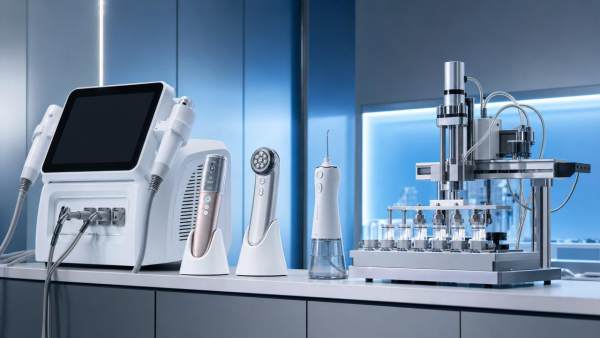
A reliable aesthetic intelligence system is not defined by data volume alone, but by how precisely it connects device physics, clinical safety, regulatory signals, and market performance.
For technical evaluation across beauty technology, reliability depends on evidence traceability, risk controls, and actionable insight.
Medical-grade optoelectronic devices, home beauty tools, oral care appliances, and cosmetic production lines all require structured intelligence.
This article explains what makes an aesthetic intelligence system trustworthy in a fast-evolving appearance economy.
Foundational meaning of an aesthetic intelligence system
An aesthetic intelligence system is a structured decision framework for beauty technology, personal care engineering, and cosmetic manufacturing.
It gathers technical, regulatory, clinical, commercial, and supply-chain information into one interpretable knowledge environment.
Its purpose is not to replace expertise. It should organize evidence so decisions become safer, faster, and more defensible.
In the AECS context, the aesthetic intelligence system links optoelectronic thermodynamics with real consumer demand for anti-aging and personal care.
This link matters because beauty devices are no longer simple lifestyle products. Many now approach medical-grade performance boundaries.
Radio frequency, HIFU, picosecond laser, EMS, IPL, sonic vibration, and automated emulsification each carry measurable physical consequences.
A reliable aesthetic intelligence system must therefore interpret both engineering parameters and human biological response.
Core definition in practical terms
Reliability means the system can produce consistent, explainable, and risk-aware conclusions under changing market and regulatory conditions.
It must show where a conclusion came from, which assumptions were used, and what uncertainties remain.
Aesthetic intelligence should not be a dashboard of scattered metrics. It must become a disciplined operating layer for judgment.
Industry conditions shaping reliability standards
The appearance economy is expanding from salon services into homes, clinics, factories, and cross-border digital commerce.
This expansion raises the standard for every aesthetic intelligence system used to assess products, risks, and market opportunities.
Consumers expect visible results, lower discomfort, elegant design, and safety that feels effortless.
Regulators increasingly examine energy-based home devices, hygiene-related appliances, and claims that imply therapeutic benefit.
At the same time, factories face pressure to prove stability, cleanliness, traceability, and production repeatability.
These signals show why a reliable aesthetic intelligence system requires more than trend scraping or supplier catalogs.
It must connect device principles, compliance risk, consumer behavior, and industrial execution into one validated view.
Evidence traceability as the first reliability pillar
Traceability is the backbone of a reliable aesthetic intelligence system. Every claim should be linked to verifiable evidence.
Evidence may include test reports, standards, patents, clinical papers, regulatory notices, teardown data, and production records.
For RF devices, source evidence should clarify frequency, electrode design, temperature control, treatment depth, and thermal distribution.
For IPL devices, it should describe wavelength range, fluence, pulse width, skin-type limitations, and protective mechanisms.
For oral care appliances, the system should assess motor frequency, water pressure, nozzle geometry, and fluid dynamic cleaning effects.
For automated cosmetic lines, it should connect process variables with stability, filling accuracy, contamination control, and throughput.
- Primary sources should be prioritized over reposted summaries.
- Technical assumptions should be labeled, not hidden.
- Conflicting data should be preserved for review.
- Evidence dates should remain visible.
Without traceability, an aesthetic intelligence system becomes a recommendation engine without accountability.
Physics-aware analysis for device evaluation
Beauty technology depends on energy transfer, mechanical motion, heat behavior, optics, acoustics, and fluid dynamics.
A reliable aesthetic intelligence system must understand these principles at a practical evaluation level.
Picosecond lasers break pigment through ultra-short pulses and photomechanical effects. Analysis must examine pulse stability and spot control.
HIFU systems rely on focused energy deposition. Reliability depends on depth accuracy, thermal dose, and protection of surrounding tissue.
RF anti-aging devices heat dermal structures through impedance-related energy conversion. Temperature feedback is therefore central.
High-speed hair dryers depend on motor efficiency, airflow structure, and heat-control algorithms that protect hair fiber integrity.
Sonic toothbrushes and water flossers require fluid motion analysis, not just vibration counts or pressure claims.
An aesthetic intelligence system that ignores physics may overvalue marketing language and undervalue engineering risk.
Safety and compliance as reliability controls
Safety is the decisive test of any aesthetic intelligence system. Attractive performance claims cannot compensate for weak risk control.
Energy-based products require evaluation of burns, eye exposure, pigmentation risk, nerve sensitivity, and misuse scenarios.
Oral care appliances require attention to gum irritation, enamel safety, choking hazards, waterproofing, and charging protection.
Cosmetic equipment requires hygiene design, cleaning validation, material compatibility, and process contamination controls.
Regulatory reliability also requires classification awareness. Some home devices may approach medical device definitions in specific markets.
A robust aesthetic intelligence system should map product claims against applicable standards, labeling rules, and evidence thresholds.
Reliable compliance intelligence should be preventive. It should reveal risk before failures become public problems.
Commercial relevance and market interpretation
Aesthetic intelligence must also interpret demand. Technical superiority alone does not guarantee adoption.
A dependable aesthetic intelligence system separates structural market signals from short promotional noise.
For home RF devices, repeat usage, perceived firmness, comfort, and app guidance may shape retention.
For IPL hair removal, purchase decisions often depend on pain control, speed, skin-tone compatibility, and replacement costs.
For high-speed dryers, noise, weight, heat stability, and hair smoothness can outweigh pure motor speed.
For production lines, buyers value yield, maintenance burden, format changeover, and compliance documentation.
A reliable aesthetic intelligence system must translate these factors into comparable decision indicators.
- Market size should be adjusted by category maturity.
- Consumer reviews should be filtered for repeated technical issues.
- Pricing analysis should consider accessories and service costs.
- Brand momentum should be compared with regulatory exposure.
Commercial reliability improves when market insight is connected with engineering feasibility and safety evidence.
Typical objects assessed by aesthetic intelligence
Aesthetic intelligence becomes useful when it is adapted to specific product and process categories.
Each category has different risks, value drivers, testing needs, and regulatory exposure.
A single aesthetic intelligence system can cover all categories only if its data model respects category-specific physics.
Otherwise, comparisons become shallow and may hide critical differences between clinical tools and consumer appliances.
Practical reliability criteria for system design
A reliable aesthetic intelligence system should be designed around explicit criteria, not vague confidence scores.
The following criteria help convert broad intelligence into usable operational judgment.
- Data provenance must identify source type, source date, author authority, and verification status.
- Technical models must explain relationships between parameters, performance, and safety outcomes.
- Regulatory mapping must connect markets, product claims, category definitions, and documentation needs.
- Risk scoring must include severity, probability, detectability, and mitigation maturity.
- Market interpretation must include demand quality, not only traffic volume or sales ranking.
- Human review must remain available for borderline claims and high-risk decisions.
These criteria help an aesthetic intelligence system remain useful when technologies and rules evolve.
They also prevent overconfidence, especially when data appears abundant but validation is weak.
Common reliability failures to avoid
Many intelligence projects fail because they collect information without building judgment quality.
In aesthetic technology, this failure can create safety, compliance, and investment risk.
- Treating supplier specifications as verified performance.
- Ignoring differences between professional use and home use.
- Comparing energy devices without skin-type and treatment-context factors.
- Tracking regulations only after enforcement actions appear.
- Reducing market attractiveness to influencer visibility.
- Using black-box scoring without explainable evidence trails.
A reliable aesthetic intelligence system should make these weaknesses visible during routine evaluation.
The strongest systems are skeptical by design, yet practical enough to guide action.
Implementation approach for dependable intelligence
Implementation should begin with category boundaries. Medical devices, home tools, appliances, and factory systems need different evidence logic.
Next, define the decision questions the aesthetic intelligence system must support.
Examples include market entry timing, product benchmark selection, compliance gap review, supplier comparison, and technology roadmap planning.
Then build an evidence hierarchy. Peer-reviewed data and official rules should weigh more than promotional claims.
Create category dashboards only after the data logic is stable. Visualization should not precede validation.
Periodic review is essential because classification rules, consumer expectations, and competing technologies change quickly.
For AECS-style intelligence, cross-disciplinary review is especially important.
Compliance, thermodynamics, optics, fluid dynamics, capital strategy, and manufacturing quality should inform the same intelligence environment.
Actionable next steps for evaluating reliability
To evaluate an aesthetic intelligence system, start with a simple audit of its most important conclusions.
Select one product category, one regulatory question, one safety issue, and one market assumption.
Check whether each conclusion has traceable evidence, clear uncertainty, and a practical recommended action.
If the system cannot explain its answer, reliability is not yet mature.
If it can explain evidence, limitations, risk level, and decision impact, it is closer to operational value.
A reliable aesthetic intelligence system should help transform scattered beauty technology signals into disciplined decisions.
For the appearance economy, that discipline supports safer products, stronger compliance, better design, and more credible global growth.
The next step is to align intelligence architecture with real evaluation tasks, then review evidence quality before scaling coverage.
When physics, safety, regulation, and market insight are stitched together, aesthetic intelligence becomes a dependable strategic asset.
Related Intelligence
- Optoelectronics & Dermal TechAesthetic Equipment Comparison Chart: Treatment Uses, Skin Types, and DowntimeExplore our aesthetic equipment comparison chart to compare treatment uses, skin-type suitability, and downtime. Discover key safety checks and make smarter device purchasing decisions.
- Optoelectronics & Dermal TechChoosing a Collagen Stimulation Device Manufacturer: Evidence and Quality ChecksChoose a collagen stimulation technology manufacturer with confidence. Learn how to verify clinical evidence, regulatory status, production quality, and service before you buy.
- Optoelectronics & Dermal TechAesthetic Device Solutions: What Multi-Treatment Clinics Should EvaluateAesthetic device solutions for multi-treatment clinics: evaluate safety, workflow, versatility, lifecycle costs, and supplier support before investing.
The Morning Broadsheet
Daily chemical briefings, market shifts, and peer-reviewed summaries delivered to your terminal.
