

The Authority in Global Agricultural Chemistry & Bio-Resources
Professional Beauty Equipment Selection Guide for Multi-Treatment Clinics
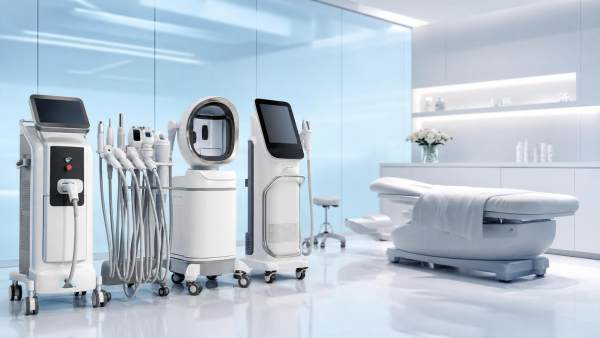
Choosing professional beauty equipment for a multi-treatment clinic is no longer a simple feature comparison. The decision affects treatment range, regulatory exposure, staff workflow, patient confidence, and the clinic’s long-term market position. In a sector shaped by faster device innovation and stricter safety expectations, the most effective investments are usually the ones evaluated as systems, not standalone machines.
That shift matters because clinics now operate at the intersection of medical aesthetics, advanced personal care technology, and consumer expectations for visible yet low-downtime results. A platform such as AECS, with its focus on optoelectronic devices, oral care technology, manufacturing systems, and compliance intelligence, reflects how connected this landscape has become. For any clinic expanding service lines, professional beauty equipment must support both clinical outcomes and business resilience.
Why equipment selection has become more strategic
Multi-treatment clinics rarely rely on one revenue stream. They may combine pigment correction, skin tightening, acne management, hair reduction, body contouring, and maintenance services in a single operating model.
That model increases flexibility, but it also raises the cost of poor equipment choices. A device that performs well in one indication but creates scheduling bottlenecks, complex training needs, or unclear compliance obligations may limit growth rather than support it.
The wider appearance economy adds another layer. Patients are more informed about picosecond lasers, RF, HIFU, IPL, EMS, and home-use technologies. They often compare clinic treatments with premium consumer devices. As a result, professional beauty equipment must demonstrate a clear difference in precision, consistency, and safety.
What counts as professional beauty equipment in a clinic setting
In practical terms, professional beauty equipment includes energy-based systems and treatment platforms designed for repeated clinical use under controlled protocols. The category covers more than premium aesthetics branding.
It often includes laser and light systems, radio frequency platforms, HIFU devices, body shaping systems, skin analysis tools, post-treatment support devices, and integrated software for treatment planning and documentation.
The strongest platforms usually share three traits. They deliver repeatable energy output, include risk controls that reduce operator variability, and fit into a service structure that can scale without constant workaround.
Clinical capability is only one layer
A clinic may be attracted to peak power, pulse duration, or applicator variety. Those matter, especially in optoelectronic treatments where thermodynamics and tissue response determine results. Still, high specification alone does not guarantee practical value.
More useful questions include whether the system supports common skin types in the local market, whether downtime fits the clinic’s positioning, and whether treatment outcomes remain consistent across different operators.
The industry signals worth tracking now
Several trends are shaping how professional beauty equipment should be assessed. One is the steady movement of clinic-grade concepts into home beauty and personal care devices. As RF, EMS, and IPL become familiar at home, clinics need stronger justification for their premium services.
Another is the tightening of regulatory and classification rules. Authorities such as the FDA and NMPA have changed how many devices are reviewed, marketed, or supported. This makes documentation, claims discipline, and post-sale technical support more important than before.
There is also growing pressure to connect treatment outcomes with workflow efficiency. A machine that needs frequent recalibration, long cooling intervals, or rare consumables may weaken margins even if headline results look impressive.
How to judge treatment versatility without overbuying
Versatility is attractive, but not every multi-function claim produces a better service portfolio. The right professional beauty equipment should match the clinic’s current case mix and its next realistic expansion path.
For example, a clinic focused on skin quality and anti-aging may gain more from a strong RF or HIFU platform with dependable protocols than from a broader device with average performance across too many indications.
Likewise, a clinic entering pigment correction and resurfacing should pay close attention to pulse control, thermal management, and patient suitability rather than assuming the most expensive laser platform is automatically the safest bet.
- Map the top three revenue-driving treatments already requested by the market.
- Check whether one platform can serve adjacent indications without compromising quality.
- Review how easily operators can switch settings, handpieces, and patient protocols.
- Estimate whether added functions create real bookings or only brochure value.
Safety, compliance, and brand credibility
In clinic aesthetics, safety is not a separate box to tick after performance. It shapes retention, referrals, and legal exposure. This is especially true for energy-based professional beauty equipment, where skin response depends on calibration, cooling, treatment depth, and operator judgment.
A credible vendor should provide more than a certificate set. It should also offer clear treatment parameters, maintenance schedules, adverse event guidance, software update policies, and evidence for marketed indications.
AECS’s emphasis on compliance intelligence is useful here. Regulatory change is not abstract. It affects import pathways, training obligations, device classification, and what a clinic can safely communicate in its treatment claims.
Questions that reduce avoidable risk
- Which approvals or registrations apply in the target market?
- How is energy output verified over time?
- What training is required before full commercial use?
- How quickly can parts, service, and technical support be delivered?
- Are marketing claims aligned with documented indications?
ROI is broader than purchase price
A low-cost system may appear efficient on paper, yet become expensive through downtime, weak treatment conversion, high consumable use, or uneven outcomes. On the other hand, premium professional beauty equipment only makes sense when its pricing model matches the clinic’s service strategy.
A more grounded ROI review should include expected utilization, treatment time per session, attachment lifespan, maintenance intervals, staff training burden, and the ability to package repeat treatments.
It also helps to separate image value from operational value. Some systems elevate brand perception immediately. Others quietly improve throughput and protocol consistency. The best investment often supports both.
Matching equipment to real clinic scenarios
Not every clinic needs the same device mix. The most effective professional beauty equipment strategy depends on service depth, local demand, staff profile, and how the brand defines patient experience.
Common decision paths
A clinic with strong anti-aging demand may prioritize RF, HIFU, and skin analysis tools that support personalized plans and visible progression tracking.
A clinic expanding into pigment and resurfacing may place more weight on laser precision, epidermal protection, and operator training depth.
A clinic competing on service speed may favor platforms with fast setup, intuitive interfaces, and low transition time between indications.
A premium image-focused brand may also consider how in-clinic systems connect with curated home-care devices, especially where maintenance routines improve treatment continuity.
A practical framework for the next decision
A useful shortlist usually begins with treatment priorities, not catalog breadth. From there, compare professional beauty equipment across five dimensions: clinical fit, safety controls, compliance readiness, operating economics, and brand alignment.
It is worth asking vendors for treatment data, service commitments, training structure, and realistic uptime assumptions. Demo sessions should be assessed for workflow logic as much as visible results.
Where the market is moving quickly, a clinic benefits from external intelligence that links device physics, compliance shifts, and commercial performance. That is where a source like AECS becomes relevant: not as promotion, but as a way to read technical decisions in a broader business context.
The next step is usually not to buy more equipment, but to define a clearer selection standard. Once treatment goals, risk limits, and growth priorities are visible, the right professional beauty equipment becomes easier to identify, compare, and defend as a long-term investment.
Related Intelligence
- Optoelectronics & Dermal TechAesthetic Device Solutions: What Multi-Treatment Clinics Should EvaluateAesthetic device solutions for multi-treatment clinics: evaluate safety, workflow, versatility, lifecycle costs, and supplier support before investing.
- Optoelectronics & Dermal TechBeauty Devices Explained: How to Choose Tools for Your Skin GoalsBeauty devices made simple: compare LED, microcurrent, RF, IPL, and cleansing tools to match your skin goals, routine, budget, and safety needs.
- Optoelectronics & Dermal TechHow to Evaluate an Optoelectronic Aesthetic Device Supplier for Clinic-Grade EquipmentChoose an optoelectronic aesthetic devices supplier with confidence. Explore key checks for clinic-grade safety, compliance, performance, service, and total cost.
The Morning Broadsheet
Daily chemical briefings, market shifts, and peer-reviewed summaries delivered to your terminal.
