

The Authority in Global Agricultural Chemistry & Bio-Resources
Dermal Heating Technology Explained: Depth Control, Treatment Goals, and Limits
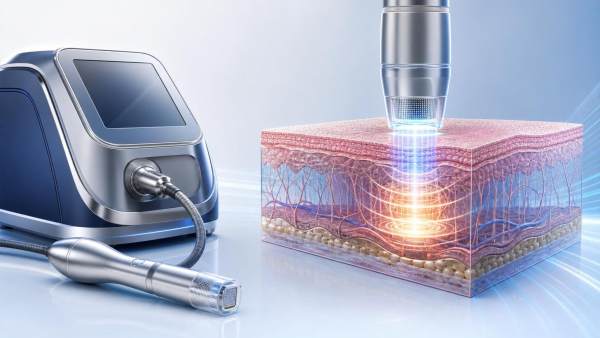
Dermal heating technology sits behind many of today’s lifting, tightening, and skin renewal systems, but performance is never defined by heat alone. What matters is where the heat forms, how evenly it spreads, how tissue responds over time, and where the device reaches its safety ceiling. In aesthetic equipment evaluation, depth control is the bridge between engineering claims and visible outcomes, especially when platforms promise collagen remodeling, contour support, or anti-aging benefits across clinical and home-use settings.
That is why dermal heating technology has become a central topic across the wider appearance economy. From RF-based home beauty tools to clinic-grade HIFU and energy-assisted treatment systems, the commercial value of a platform depends on thermodynamic precision, repeatability, and compliance logic as much as headline efficacy. For intelligence-led platforms such as AECS, this topic is not isolated. It connects device physics, treatment design, risk control, and the broader demand for safe, medical-grade personalization.
What dermal heating technology really means
At its core, dermal heating technology refers to controlled energy delivery that raises tissue temperature in targeted skin layers. The goal is not random warming. The goal is biologically useful heating within a measurable thermal window.
Depending on the platform, that energy may come from radio frequency, ultrasound, laser-assisted mechanisms, or hybrid architectures. Each route creates a different penetration profile, thermal shape, and treatment experience.
The dermis is a frequent target because it contains collagen, elastin support structures, vascular components, and extracellular matrix elements linked to firmness and texture. Some systems also aim deeper, reaching subdermal tissue or the SMAS layer for structural lifting effects.
A useful evaluation starts with one simple question: is the device heating the intended layer consistently enough to trigger a predictable response without overheating adjacent tissue?
Depth control is the real differentiator
Many systems can generate heat. Far fewer can control depth with precision under real treatment conditions. Skin impedance, hydration, contact pressure, coupling quality, and anatomical variation can all shift where energy lands.
In dermal heating technology, depth control is not only a design feature. It is a system-level outcome created by applicator geometry, frequency selection, pulse structure, cooling strategy, firmware logic, and operator dependency.
Why depth variability matters
If heat concentrates too superficially, the result may be discomfort, erythema, or epidermal stress without meaningful remodeling. If heat goes too deep or diffuses too broadly, the system may miss the intended biological target.
That is why credible claims should be supported by more than marketing diagrams. Thermal mapping, tissue modeling, ex vivo studies, and controlled clinical data provide stronger evidence than simplified penetration visuals.
Common control mechanisms
- Energy frequency and waveform settings shape current flow or focal depth.
- Applicator design influences contact stability and field distribution.
- Cooling protects superficial layers while preserving deeper thermal effect.
- Sensors and feedback loops help limit overshoot during variable skin conditions.
- Treatment software can lock protocols, but does not remove all user dependence.
Treatment goals are not all the same
A common mistake in device comparison is treating all dermal heating technology as if it serves one universal anti-aging purpose. In reality, treatment goals differ by layer, thermal threshold, treatment cadence, and expected endpoint.
Some platforms target gradual collagen stimulation through repeated mild heating. Others create focused thermal coagulation points that initiate wound-healing cascades and structural contraction. These are very different biological strategies.
This distinction matters in both clinical and consumer categories. A home RF device should not be judged by the same endpoint logic as a focused ultrasound platform, even if both are described as anti-aging solutions.
Where the industry is paying closer attention
The current market no longer rewards generic heat claims. Buyers, regulators, and technical reviewers increasingly ask how a system proves layer selectivity, thermal consistency, and safety under diverse use conditions.
This shift is especially visible in the AECS coverage areas. Medical aesthetic optoelectronic devices are expected to show rigorous energy modeling. Home beauty systems face rising scrutiny as compact RF and EMS tools borrow clinical language. Even adjacent sectors, such as oral care or automated cosmetics equipment, reflect the same trend toward measurable engineering claims rather than broad performance narratives.
More attention is also moving toward regulatory framing. Once a device positions dermal heating technology around lifting, remodeling, or medical-like outcomes, evidence standards, labeling discipline, and post-market risk expectations can change quickly across regions.
The practical limits of dermal heating technology
No matter how advanced the platform appears, dermal heating technology has hard limits. Tissue is not a uniform engineering substrate. Skin thickness, hydration, pigmentation, fibrosis history, and anatomical curvature all influence thermal behavior.
There is also a narrow balance between under-treatment and thermal injury. Systems designed for deeper effect often require stronger control logic, because the margin for comfort loss or unintended heating can shrink as energy intensifies.
Typical constraints to assess
- Depth claims may vary across facial zones and body sites.
- Higher peak energy does not guarantee better remodeling.
- Cooling can improve tolerance but may reduce intended thermal efficiency.
- Repeated sessions may be needed where single-pass results are limited.
- Consumer devices usually trade depth and speed for safety margin.
In other words, platform limits should be read as part of device design logic, not as a flaw by default. The question is whether those limits are transparent and compatible with the intended use case.
How to compare platforms in a business setting
A solid comparison framework links technical performance with commercial reality. A system may show elegant thermodynamics on paper, yet fail when treatment throughput, consumable economics, training burden, or claims compliance are added.
For that reason, dermal heating technology should be reviewed across four layers at once: physics, biology, usability, and regulatory fit. Separating these dimensions often leads to misleading conclusions.
A workable review checklist
- Check whether the target layer matches the stated treatment goal.
- Review how depth control is maintained across different skin conditions.
- Look for objective thermal or histological validation, not only user feedback.
- Compare safety mechanisms against realistic misuse or edge cases.
- Examine whether marketing language outruns regulatory positioning.
- Test whether treatment consistency depends heavily on operator technique.
This is where an intelligence perspective becomes valuable. AECS-style analysis is useful because it does not isolate one data point. It connects thermodynamic structure, treatment outcome logic, manufacturing decisions, and compliance risk into one evaluation path.
What deserves attention next
The next stage for dermal heating technology will likely center on smarter feedback, more individualized dosing, and tighter evidence standards. As devices move across clinic, home, and hybrid care channels, the old distinction between powerful and safe becomes less useful.
A better distinction is whether a platform can deliver controlled heat to the right layer, for the right purpose, with limits that are clearly defined and verifiable. That standard supports better product screening, stronger claim validation, and more durable commercial positioning.
For any upcoming review, it helps to begin with three anchors: the true tissue target, the intended treatment endpoint, and the device’s thermal boundaries. Once those are clear, comparing dermal heating technology becomes less about broad promises and more about evidence, fit, and long-term reliability.
Related Intelligence
- Optoelectronics & Dermal TechAesthetic Device Solutions: What Multi-Treatment Clinics Should EvaluateAesthetic device solutions for multi-treatment clinics: evaluate safety, workflow, versatility, lifecycle costs, and supplier support before investing.
- Optoelectronics & Dermal TechBeauty Devices Explained: How to Choose Tools for Your Skin GoalsBeauty devices made simple: compare LED, microcurrent, RF, IPL, and cleansing tools to match your skin goals, routine, budget, and safety needs.
- Optoelectronics & Dermal TechHow to Evaluate an Optoelectronic Aesthetic Device Supplier for Clinic-Grade EquipmentChoose an optoelectronic aesthetic devices supplier with confidence. Explore key checks for clinic-grade safety, compliance, performance, service, and total cost.
The Morning Broadsheet
Daily chemical briefings, market shifts, and peer-reviewed summaries delivered to your terminal.
