

The Authority in Global Agricultural Chemistry & Bio-Resources
Collagen Stimulation Methods Compared: RF, Microneedling, HIFU, and Topicals Explained
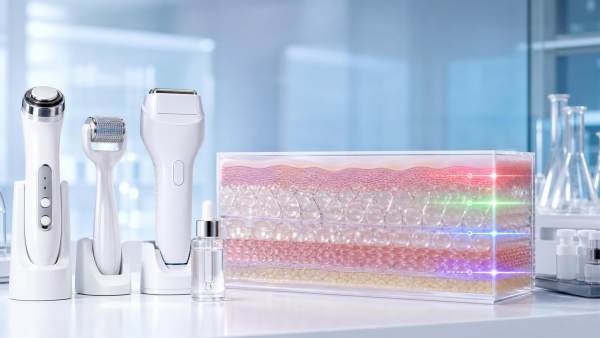
Collagen stimulation sits at the center of today’s anti-aging conversation because it connects visible skin change with device physics, treatment design, and consumer expectations. RF, microneedling, HIFU, and topicals all promise firmer, smoother skin, yet they do not act at the same depth, create the same tissue response, or fit the same use case. For a market shaped by clinical aesthetics, home beauty devices, and evidence-led product development, understanding these differences is more useful than chasing a single “best” method.
What collagen stimulation really means
In simple terms, collagen stimulation refers to triggering the skin’s repair pathways so new structural proteins are produced over time. The goal is not instant replacement. It is controlled biological remodeling.
This matters because collagen decline is linked with laxity, thinner skin, rough texture, enlarged pores, and slower recovery. Elastin changes and fat redistribution also contribute, but collagen remains a practical benchmark in treatment planning.
From an AECS perspective, this topic also reveals how the appearance economy works underneath the surface. Energy delivery, thermal control, material design, and safety standards all shape whether collagen stimulation is clinically meaningful or merely a marketing phrase.
Why the comparison matters now
The current market mixes physician-led procedures with home-use technologies and increasingly sophisticated topical systems. That creates more access, but it also creates confusion.
A clinic device may target deeper tissue with precise thermal mapping. A home RF tool may support gradual maintenance. A serum may improve the environment for repair without matching device-level remodeling.
The industry’s attention is no longer on claims alone. It is on depth, dose, repeatability, comfort, downtime, compliance, and whether a method fits a broader care pathway.
RF, microneedling, HIFU, and topicals at a glance
Each collagen stimulation method works by a different trigger. That is the starting point for any sensible comparison.
That table simplifies the landscape, but it already shows why direct one-to-one comparisons often mislead. These methods overlap in outcome language, not in technical behavior.
How RF approaches collagen stimulation
Radio frequency generates heat inside tissue by electrical resistance. When properly controlled, that heat can denature existing collagen and stimulate repair pathways that support new collagen formation.
The practical value of RF lies in its balance. It can improve skin tightness, fine texture, and mild laxity with less downtime than more invasive procedures.
Results depend heavily on device architecture. Monopolar, bipolar, multipolar, and fractional RF do not behave the same way. Energy distribution, cooling design, and contact stability all affect tissue response.
This is also why AECS tracks RF so closely. The move from clinic platforms to home beauty devices has made collagen stimulation more accessible, but not automatically equivalent. Lower energy systems often favor maintenance over dramatic restructuring.
Where RF fits best
- Mild to moderate laxity
- Texture support with limited downtime
- Longer-term maintenance programs
- Users comparing clinic and home device pathways
Why microneedling remains relevant
Microneedling creates tiny channels in the skin, initiating wound-healing signals that support collagen stimulation. The method is mechanically simple, yet biologically effective when depth and protocol are appropriate.
Its strength is not deep lifting. It is precision in surface-to-midlevel remodeling. That makes it especially useful for acne scars, enlarged pores, superficial wrinkles, and uneven texture.
Microneedling also sits at an interesting business intersection. It can stand alone, pair with topical actives, or be combined with RF in advanced platforms. That combination reflects a larger industry trend toward layered treatment logic rather than single-modality promises.
The main variables are needle depth, density, treatment frequency, and infection control. Those variables matter more than broad claims about “natural collagen stimulation.”
HIFU and the deeper tissue conversation
HIFU is often discussed in the same anti-aging category as RF, but its tissue target is different. Focused ultrasound creates thermal coagulation points at selected depths, including deeper planes associated with structural support.
That is why HIFU is more often linked with lifting and contouring than with pore refinement or scar revision. It addresses deeper collagen stimulation, not broad surface renewal.
For information-driven evaluation, the important question is not whether HIFU “works.” It is whether the visible concern originates in tissue laxity, skin quality, or both. A jawline problem and a texture problem rarely need the same primary tool.
Treatment planning also matters because HIFU outcomes tend to emerge gradually. Immediate tightening may occur, but fuller remodeling usually takes time.
What topicals can and cannot do
Topicals occupy a different place in collagen stimulation. Retinoids, peptides, vitamin C, growth factor-inspired formulas, and barrier-support systems may improve the biochemical environment for repair.
They can help with daily maintenance, surface smoothness, hydration balance, and post-procedure support. In some cases, they contribute to measurable long-term improvement in fine lines and skin quality.
Still, topical collagen stimulation should not be confused with energy-based tissue remodeling. Penetration limits, formulation stability, and user adherence all shape the outcome.
This does not make topicals secondary. It makes them contextual. In real-world care pathways, they often protect the value created by devices and procedures.
Choosing by concern, not by trend
A useful comparison starts with the visible problem and the desired timeline. The same collagen stimulation claim can point to very different recommendations.
- If the issue is early laxity, RF or HIFU may be more relevant than topicals alone.
- If the issue is acne scarring or pores, microneedling usually deserves closer attention.
- If maintenance and consistency matter most, topicals and home RF may play a larger role.
- If downtime tolerance is low, treatment intensity must be judged carefully.
In practice, many effective strategies are staged rather than singular. Deep support, surface refinement, and home maintenance often sit in different layers of the same plan.
Signals worth checking before any decision
The strongest collagen stimulation option is not always the most suitable one. Better decisions usually come from a narrower set of technical and practical checks.
- Match depth with the actual concern, not just the marketing outcome.
- Look for evidence quality, not only before-and-after photography.
- Check treatment intervals, cumulative cost, and recovery expectations.
- Review device safety, regulatory status, and protocol consistency.
- Consider whether the method is a primary intervention or a maintenance layer.
This broader view is especially relevant in a market where medical-grade optoelectronics, home-use appliances, and cosmetic systems increasingly overlap.
A practical next step
The most reliable way to compare collagen stimulation methods is to build a simple decision frame: target depth, skin concern, downtime tolerance, maintenance commitment, and evidence strength.
From there, RF, microneedling, HIFU, and topicals become easier to place in context. They are not interchangeable tools. They are different interventions within the same anti-aging language.
For ongoing evaluation, it helps to track not only outcomes, but also the technology logic behind them. That is often where clearer judgments begin.
Related Intelligence
- Optoelectronics & Dermal TechAesthetic Device Solutions: What Multi-Treatment Clinics Should EvaluateAesthetic device solutions for multi-treatment clinics: evaluate safety, workflow, versatility, lifecycle costs, and supplier support before investing.
- Optoelectronics & Dermal TechBeauty Devices Explained: How to Choose Tools for Your Skin GoalsBeauty devices made simple: compare LED, microcurrent, RF, IPL, and cleansing tools to match your skin goals, routine, budget, and safety needs.
- Optoelectronics & Dermal TechHow to Evaluate an Optoelectronic Aesthetic Device Supplier for Clinic-Grade EquipmentChoose an optoelectronic aesthetic devices supplier with confidence. Explore key checks for clinic-grade safety, compliance, performance, service, and total cost.
The Morning Broadsheet
Daily chemical briefings, market shifts, and peer-reviewed summaries delivered to your terminal.
