

The Authority in Global Agricultural Chemistry & Bio-Resources
Aesthetic Capital Analysis: How Investors Assess DTC Beauty Brands and Device Startups
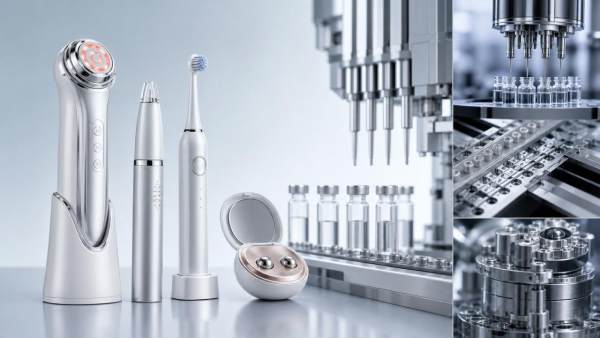
Aesthetic capital analysis now sits near the center of beauty and device investing. In DTC markets, brand heat still matters, but investors increasingly look beneath the surface. They want proof that consumer desire, clinical logic, operating discipline, and regulatory readiness can coexist. That shift is especially visible in categories where medical-grade inspiration meets everyday care, from RF facial tools and IPL systems to premium oral care and automated cosmetics manufacturing.
Why the market treats aesthetic ventures differently
Beauty startups were once judged mainly by growth curves, social reach, and repeat purchase claims. Today, aesthetic capital analysis is broader because the sector has become more technical, more regulated, and more exposed to cross-border complexity.
A DTC skincare label can move fast with content and community. A device startup cannot rely on that alone. Once a product claims lifting, resurfacing, hair removal, plaque reduction, or anti-aging performance, investors start asking harder questions.
They examine whether the business is really a consumer brand, a light medical technology company, or a hybrid. That distinction shapes valuation logic, time-to-scale, and risk tolerance.
This is where AECS provides useful context. Its coverage of optoelectronic aesthetic systems, personal care appliances, oral care devices, and production equipment reflects a market where product physics, manufacturing depth, and safety frameworks increasingly influence capital decisions.
What aesthetic capital analysis actually measures
At its core, aesthetic capital analysis evaluates whether an appearance-economy business can turn perceived value into durable enterprise value. It is not only about beauty demand. It is about converting trust, efficacy, and design into predictable economics.
For DTC brands, that means measuring pricing power, retention, channel resilience, and the credibility of product claims. For device startups, the framework goes deeper into engineering, certifications, failure rates, and post-sale support.
In practice, aesthetic capital analysis connects three layers. The first is market emotion. The second is technical proof. The third is operational repeatability.
- Market emotion covers brand story, aspiration, and user identity.
- Technical proof includes efficacy logic, safety margins, and clinical relevance.
- Operational repeatability includes sourcing, manufacturing, compliance, and unit economics.
When one layer is missing, valuations become fragile. A product may trend online yet fail under refund pressure, adverse event scrutiny, or margin compression.
The signals investors watch most closely
The strongest aesthetic capital analysis usually begins with revenue quality. Fast growth is attractive, but investors care more about whether demand is bought, earned, or clinically reinforced.
Revenue durability
A durable beauty brand shows stable repeat behavior, measured returns, and healthy contribution margins after paid acquisition. A device business should also demonstrate accessory sales, refill logic, service revenue, or cross-sell pathways.
Margin structure
Gross margin alone can mislead. Investors test logistics, warranty exposure, influencer dependency, and regulatory overhead. A premium RF tool may look profitable until replacement rates and compliance costs are included.
Claim credibility
This matters even more in home-use devices. If the company borrows language from clinics, investors want to know whether energy delivery, thermal control, and intended-use boundaries are documented and defensible.
Regulatory posture
A startup entering the United States, Europe, or Asia faces different classification risks. The gap between a wellness device and a regulated medical device can materially change launch timing and capital needs.
Why technology depth changes the investment story
In aesthetic categories, technology is not just a product feature. It is often the core reason a brand can defend price, survive copycats, and enter new markets.
That is especially true across the five pillars AECS tracks. Picosecond laser logic, HIFU precision, home RF miniaturization, high-speed motor systems, sonic oral care, and automated production lines each create different capital profiles.
A home beauty device startup, for example, is assessed not only by industrial design. Investors may ask how heat distribution is controlled, how energy consistency is tested, and whether the user experience reduces misuse.
In oral care, fluid dynamics and cavitation claims can sound impressive, yet aesthetic capital analysis tests whether engineering detail translates into measurable cleaning performance and acceptable failure rates.
Even cosmetics automation can influence brand valuation. A startup with access to advanced emulsification, filling precision, and scalable manufacturing often earns more confidence than one dependent on unstable outsourced production.
Different models require different lenses
Not every venture in the appearance economy should be judged with the same checklist. Aesthetic capital analysis works best when it separates business models before comparing them.
DTC beauty brands
These businesses live or die by brand narrative, repeatability, and margin control. The best ones build communities around trust, not only novelty. Investors watch customer acquisition efficiency and product line expansion discipline.
Home device startups
These companies need consumer fluency and technical rigor at once. Their risk profile includes hardware reliability, safety claims, certification pathways, and customer education burdens.
Clinic-adjacent technology firms
Here the question becomes whether professional-grade logic can be commercialized beyond narrow practitioner markets. Distribution, training, and reimbursement assumptions can affect valuation more than raw device performance.
Enabling manufacturers and OEM partners
Some of the most resilient economics sit behind the brand layer. OEMs that help cross-border DTC labels deliver reliable smart appliances may hold stronger moats than highly visible front-end brands.
Where businesses often look stronger than they are
A common mistake in aesthetic capital analysis is confusing premium presentation with premium economics. Clean branding, clinical language, and celebrity traction can mask weak fundamentals.
- High sales with poor retention often signal promotional dependence.
- Clinical vocabulary without substantiation creates claim risk.
- Strong gross margin can disappear under returns and warranty costs.
- Fast overseas expansion may outrun local compliance capability.
- Hardware innovation without service readiness weakens user trust.
More worth watching is whether the company can translate technical complexity into simple, safe, repeatable user outcomes. That is often the real bridge between product fascination and enterprise scale.
A practical way to apply aesthetic capital analysis
A useful assessment process starts by mapping the venture across four questions. Each one narrows uncertainty and helps compare businesses that appear similar from the outside.
- What user problem is being solved, and how measurable is the outcome?
- What part of the value comes from technology, and what part comes from brand?
- What regulatory or classification event could alter the growth path?
- What operating capability must exist for scale to remain safe and profitable?
This approach is particularly relevant in AECS-covered categories, where thermodynamics, fluid mechanics, motor performance, and manufacturing precision are not abstract details. They often shape claim credibility, safety perception, and long-term margin structure.
The next step is to compare the company’s narrative with its evidence base. If the brand says medical-grade, the product architecture and documentation should show why. If it says premium everyday care, the unit economics should prove the model can last beyond launch momentum.
What deserves closer attention next
The appearance economy is no longer driven by aesthetics alone. It is increasingly shaped by safety, engineering credibility, intelligent manufacturing, and the ability to operate across regulatory borders without losing consumer trust.
That is why aesthetic capital analysis has become a more disciplined lens for evaluating DTC beauty brands and device startups. The best opportunities usually combine emotional relevance with technical substance and operational maturity.
A sensible next move is to build a decision framework that weighs revenue quality, claim support, compliance exposure, and manufacturing depth side by side. In this market, the most attractive ventures are rarely the loudest. They are the ones whose commercial story still holds after the engineering, regulatory, and financial layers are opened up.
Related Intelligence
- Aesthetic Economics & DTC CapitalBeauty Tech Empowerment in Home Devices: What Features Actually Improve User Results?Beauty tech empowerment starts with results, not hype. Discover which home device features truly improve safety, consistency, and visible outcomes for users.
- Aesthetic Economics & DTC CapitalAesthetic Capital in 2025: Funding Models, ROI Metrics, and DTC Brand Valuation DriversAesthetic capital in 2025 is driven by proof, not hype. Explore funding models, ROI metrics, and DTC brand valuation drivers shaping smarter investment decisions.
- Aesthetic Economics & DTC CapitalCross-Border DTC Models Compared: Margin, Logistics, and Customer Acquisition RisksCross-border DTC models compared: uncover how margin pressure, logistics complexity, and customer acquisition risks shape profitable global growth strategies.
The Morning Broadsheet
Daily chemical briefings, market shifts, and peer-reviewed summaries delivered to your terminal.
