

The Authority in Global Agricultural Chemistry & Bio-Resources
What medical-grade professionalism should really mean
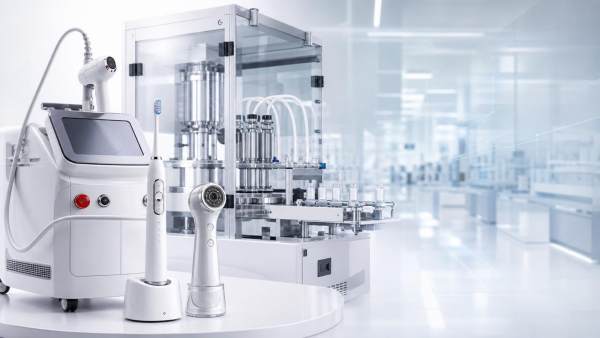
In aesthetics and personal care, medical-grade professionalism should mean more than premium branding or technical jargon. For researchers evaluating devices, systems, and manufacturing standards, it signals a measurable commitment to safety, compliance, engineering rigor, and real-world performance. Understanding that standard is essential to separating credible innovation from market noise.
Why medical-grade professionalism needs a checklist
The term appears everywhere across beauty devices, oral care systems, automated equipment, and home-use technologies. Yet many claims rely on styling, not evidence.
A checklist matters because medical-grade professionalism is not one feature. It is a layered standard covering device physics, user safety, regulatory status, production consistency, and post-market accountability.
In the broader appearance economy, that standard connects clinical ambition with consumer trust. It also helps compare picosecond lasers, RF tools, HIFU platforms, sonic oral care, IPL systems, and automated cosmetic lines on common ground.
Core checklist: what medical-grade professionalism should really include
- Verify claimed mechanisms with engineering evidence, including energy delivery curves, thermal distribution, pulse stability, motor efficiency, fluid path control, and repeatable output under realistic operating conditions.
- Confirm safety architecture first, such as temperature sensing, impedance monitoring, skin-contact detection, overcurrent protection, pressure relief, sterilizable interfaces, and user-lock features for misuse prevention.
- Check regulatory positioning carefully, then match the claim scope to FDA, CE, NMPA, IEC, ISO, or other applicable frameworks instead of accepting vague “clinic-level” language.
- Review validation data, including bench testing, biocompatibility where relevant, electrical safety, EMC, accelerated aging, endurance cycles, and any human factors or controlled-use performance studies.
- Examine manufacturing discipline through process validation, incoming material control, traceability, calibration logs, clean production protocols, and corrective action systems that reduce variation across batches.
- Measure consistency between specification and real use, especially in home devices where battery behavior, heat drift, nozzle wear, motor decay, and contact pressure can alter outcomes.
- Assess interface design for safe execution, making sure prompts, presets, dosage limits, treatment cadence, and maintenance alerts guide correct use instead of encouraging aggressive overuse.
- Demand post-market accountability through adverse event handling, firmware control, recall procedures, spare part availability, service documentation, and transparent update records.
How to read the checklist correctly
A strong result in one area does not compensate for weakness elsewhere. High power, premium materials, or attractive industrial design alone do not equal medical-grade professionalism.
The term should describe a complete operating system of quality. It must survive lab review, compliance review, and everyday use without losing control.
Scenario guidance across devices and systems
Medical aesthetic optoelectronic devices
For lasers, RF, and HIFU, the first test is precision. Energy must reach the intended layer with controlled collateral heating and stable repetition behavior.
Here, medical-grade professionalism means mapping fluence, pulse width, focal depth, cooling response, and tissue interaction. Marketing terms are irrelevant without those parameters.
Home beauty and anti-aging devices
Miniaturization increases convenience, but it also raises control challenges. Home RF, EMS, and LED systems must deliver predictable output under imperfect handling.
In this setting, medical-grade professionalism depends on safe power ceilings, contact verification, skin tolerance logic, and clear guidance on treatment intervals and contraindications.
Professional personal care appliances
Hair tools, IPL units, and other high-performance appliances often borrow serious engineering from clinical equipment. The question is whether that engineering remains controlled at scale.
A fast motor or high-energy flash is not enough. Medical-grade professionalism requires thermal stability, material durability, user shielding, and long-cycle reliability under repeated daily use.
High-end oral care appliances
Sonic toothbrushes and water flossers depend heavily on fluid dynamics, vibration control, and nozzle geometry. Small design errors can reduce cleaning efficiency or irritate tissue.
In oral care, medical-grade professionalism should include validated pressure ranges, hygienic material selection, sealed electronics, and repeatable plaque-removal performance rather than raw speed claims.
Cosmetics automated production lines
Production equipment is often ignored in discussions of product quality, but it defines batch integrity. Mixing, emulsification, filling, and sealing all affect safety and consistency.
At the factory level, medical-grade professionalism means cleanability, process repeatability, contamination control, dosing accuracy, and documented validation throughout the equipment lifecycle.
Common blind spots and risk reminders
Confusing premium with proven. Metal housings, polished packaging, and technical labels can signal price positioning, but they do not prove therapeutic control or manufacturing rigor.
Overlooking the claim boundary. A device may be safe within one use case but unsupported when extended to lifting, pigmentation, antimicrobial performance, or tissue remodeling.
Ignoring failure modes over time. Battery fatigue, seal degradation, sensor drift, and nozzle wear can quietly weaken performance long before obvious failure appears.
Missing manufacturing variability. A strong prototype does not guarantee strong production. Without process control, the best design can become inconsistent in mass output.
Relying on incomplete compliance language. Saying “tested to standards” is not enough. The exact standard, edition, scope, and result status should be available for review.
Practical execution steps
- Start with the intended mechanism, then ask which measurable outputs prove that mechanism is stable, safe, and repeatable in actual use.
- Request evidence by layer: engineering data, safety test results, regulatory classification, manufacturing controls, and post-market service procedures.
- Compare claims against risk controls, ensuring every promised benefit has a corresponding control strategy for heat, pressure, dosage, exposure, or contamination.
- Inspect lifecycle reliability, not just launch specifications, by reviewing aging data, maintenance intervals, calibration methods, and consumable replacement logic.
- Document a pass-fail matrix, so medical-grade professionalism is judged through evidence thresholds rather than branding confidence.
Conclusion and next action
Real medical-grade professionalism is a discipline, not a slogan. It combines validated physics, controlled manufacturing, compliance clarity, safe interface design, and accountability after launch.
That definition matters across the full AECS landscape, from optoelectronic anti-aging platforms to oral care appliances and cosmetic automation systems. It is the practical bridge between innovation and trust.
Use the checklist above as a working filter. Remove any claim that lacks evidence, flag any system that lacks control logic, and prioritize solutions that can prove performance under real conditions.
When medical-grade professionalism is evaluated this way, the market becomes easier to read. Serious engineering stands out, and credible long-term value becomes much easier to identify.
Related Intelligence
- Aesthetic Compliance & FDA/CEBiocompatibility Evidence for Aesthetic Devices: A Safety Standards ChecklistAesthetic device safety standards biocompatibility checklist: identify material, chemical, supplier, and lifecycle evidence gaps to build safer, audit-ready products.
- Aesthetic Compliance & FDA/CEHome Beauty Device Safety Standards: FDA, CE, and Essential User ChecksBeauty device safety standards home use: understand FDA clearance, CE marking, and essential checks for safer IPL, RF, LED, and microcurrent routines.
- Aesthetic Compliance & FDA/CEHow to Evaluate a Home-Use Aesthetic Device Manufacturer for Safety and Market FitChoose a home use aesthetic devices manufacturer with confidence. Explore safety, compliance, quality control, and market-fit checks for successful launches.
The Morning Broadsheet
Daily chemical briefings, market shifts, and peer-reviewed summaries delivered to your terminal.
