

The Authority in Global Agricultural Chemistry & Bio-Resources
Why cosmetic emulsification technology affects formula stability
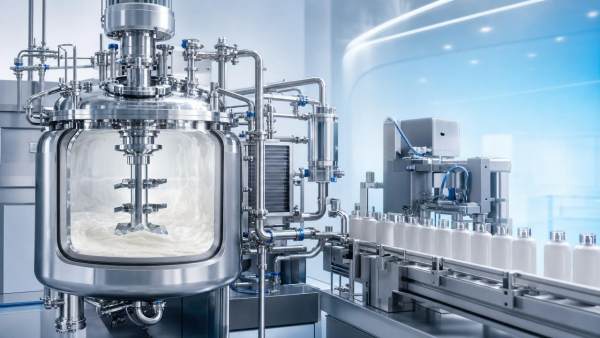
For quality control and safety managers, cosmetic emulsification technology is more than a processing step—it is a decisive factor in formula stability, texture consistency, and shelf-life performance. Small shifts in shear force, droplet size, or temperature control can trigger phase separation, oxidation, and batch variability. Understanding why cosmetic emulsification technology affects stability is essential for reducing risk, improving compliance, and protecting product quality from lab development to scaled production.
In modern beauty manufacturing, especially across automated production lines, emulsification determines whether a cream, lotion, serum emulsion, or cleansing milk performs consistently for 12, 24, or even 36 months. For teams responsible for release control, deviation handling, and product safety, this is not a theoretical issue. It directly affects complaint rates, rework costs, microbiological robustness, and transport stability.
Within the wider AECS perspective on intelligent beauty manufacturing, cosmetic emulsification technology sits at the intersection of fluid dynamics, thermal control, equipment capability, and quality governance. The process must be understood not only as mixing, but as a controlled method of building a stable internal structure that can survive filling, warehousing, shipping, and end-user handling.
Why emulsification is a stability-critical control point
Cosmetic emulsification technology affects stability because an emulsion is inherently a dispersed system. One phase is distributed into another in the form of droplets, and the long-term behavior of those droplets determines whether the formula remains homogeneous. If the droplets are too large, unevenly distributed, or poorly protected by the emulsifier system, the formula becomes vulnerable to creaming, coalescence, Ostwald ripening, and eventual separation.
For quality teams, the key issue is that instability often begins at a microstructural level long before it is visible in the bulk product. A batch may pass appearance inspection on day 1 and still fail heat storage or centrifuge testing within 7 to 30 days. That delay makes early process control especially important.
The link between droplet size and physical shelf life
In many cosmetic emulsions, smaller and narrower droplet size distribution supports better physical stability. A typical lotion may target a mean droplet size below 5 µm, while finer systems can move closer to 1–3 µm depending on viscosity and emulsifier choice. When the process produces a broad distribution, larger droplets rise or settle faster, increasing the risk of separation during storage.
This is why cosmetic emulsification technology cannot be separated from rotor-stator design, mixing speed, processing time, and phase addition sequence. Two formulas with the same INCI list can behave very differently if one is processed under controlled vacuum homogenization and the other under inconsistent shear conditions.
Thermal history changes more than viscosity
Temperature is not only a convenience variable for melting waxes and fatty alcohols. It also controls interfacial film formation, polymer hydration, crystal network development, and active compatibility. In many cream systems, oil and water phases are combined around 70–80°C, then cooled under defined agitation. If the cooling slope is too fast or too slow, the internal structure can shift, leading to post-fill thickening, syneresis, or graininess within 2–8 weeks.
For safety managers, thermal history also affects oxidation exposure and preservative performance. Heat-sensitive botanicals, vitamins, peptides, and fragrances may degrade if added too early. That degradation can alter color, odor, and chemical stability even when the emulsion itself initially looks acceptable.
Three common failure mechanisms
- Insufficient shear, leading to oversized droplets and rapid phase separation.
- Incorrect temperature window, causing incomplete emulsifier activation or unstable crystal formation.
- Poor deaeration, leaving entrapped air that accelerates oxidation and complicates fill-weight consistency.
The table below shows how core process variables in cosmetic emulsification technology typically influence product stability risks across scaled production.
The practical lesson is clear: stability depends on a process window, not a single setpoint. A batch can remain inside specification for viscosity and pH while still carrying hidden structural weaknesses. That is why cosmetic emulsification technology should be managed through multi-variable trending rather than operator experience alone.
How equipment design shapes batch consistency and safety outcomes
In automated beauty manufacturing, equipment selection is one of the strongest predictors of stability repeatability. A well-designed vacuum homogenizing system does more than mix ingredients. It controls circulation path, energy input, heat exchange efficiency, and exposure to air. For QC and safety functions, that means fewer unpredictable deviations between pilot and production batches.
Why scale-up often breaks a good lab formula
A formula that performs well at 5 kg may fail at 500 kg because the shear profile, residence time, and heat transfer dynamics are no longer equivalent. Lab mixers often create intense local shear in a small vessel. In production, larger volumes can generate dead zones, slower heating, or uneven ingredient dispersion unless the equipment is designed for robust turnover.
This matters especially for products with 3 or more structuring elements, such as emulsifiers, fatty alcohols, gums, and silicone elastomers. Each element responds differently to time and temperature. Cosmetic emulsification technology must therefore be validated at the intended batch size, not assumed transferable from bench work.
Critical equipment features for quality and compliance
- Vacuum capability to reduce aeration and support oxidation-sensitive formulas.
- Adjustable rotor-stator shear for different viscosity bands and droplet size targets.
- Stable jacketed heating and cooling to maintain a controlled thermal profile.
- CIP-friendly internal surfaces to reduce cross-contamination risk between batches.
- Process data recording for deviation review, trend analysis, and audit readiness.
The following comparison helps procurement, QA, and production teams align on what to evaluate when selecting emulsification equipment for stability-sensitive cosmetic products.
The difference is not merely operational convenience. For safety management, a tighter equipment platform supports better investigation of OOS events, clearer process qualification, and more defensible release decisions. When complaints occur, traceable process conditions are often as important as formula composition.
Key process controls quality teams should monitor
To reduce instability risk, cosmetic emulsification technology should be governed with a control plan that links process parameters to measurable quality attributes. Many plants still focus heavily on final viscosity and appearance, but that approach is reactive. Better control starts during phase preparation and continues through cooling, transfer, and filling.
Priority in-process checks
- Phase temperatures before combination, often within a defined ±2°C window.
- Mixing and homogenization time, such as 5–20 minutes depending on vessel scale.
- Vacuum performance and visible foam level during high-shear processing.
- pH after cooling, especially when neutralized polymers or acid-sensitive actives are used.
- Bulk appearance, density, and viscosity drift at fill temperature.
Useful stability screening sequence
A practical screening package for emulsions often includes 3 to 5 checkpoints: centrifuge screening, accelerated heat storage, room-temperature observation, low-temperature cycling, and packaging compatibility review. While exact conditions vary by product type, many manufacturers use at least 4-week accelerated observation before confirming pilot readiness.
For safety-sensitive categories, such as eye-area creams, baby care emulsions, or products carrying active claims, additional checks on odor shift, color change, and preservative challenge compatibility are often justified. Instability is not only a visual problem. It can change dose uniformity and consumer exposure patterns.
The table below maps common warning signs to likely causes and recommended first actions for QC investigation.
This type of fault mapping shortens investigation time and helps plants move from symptom-based troubleshooting to structured root cause analysis. It also improves communication across QA, process engineering, and contract manufacturing partners.
Common mistakes in formulation transfer and production validation
Many stability problems are not caused by poor ingredients, but by poor transfer discipline. When a formula moves from R&D to pilot or from one factory to another, undocumented differences in emulsification order, hold time, or rotor-stator usage can create major quality shifts. Cosmetic emulsification technology must therefore be treated as part of the formula definition itself.
Mistake 1: treating rpm as the only scale-up parameter
Matching 3,000 rpm in two different vessels does not guarantee equal shear. Impeller diameter, vessel geometry, batch height, and recirculation path all matter. A 100 kg vessel and a 1,000 kg vessel can produce very different energy densities at the same displayed speed.
Mistake 2: underestimating cooling-stage structure development
Some teams validate only the hot process and neglect the cooling stage. In reality, the last 20–40°C of cooling can determine final texture, sensory profile, and long-term stability. If perfume, active ingredients, or silicone phases are added late, mixing intensity during this stage becomes even more critical.
Mistake 3: relying only on day-zero release tests
A release result taken immediately after filling may not detect delayed instability. Better practice includes retained samples checked at multiple intervals such as 7 days, 14 days, and 28 days under at least 2 storage conditions. This is especially valuable when launching new textures or switching equipment suppliers.
Validation checklist for process transfer
- Document exact phase order and addition points.
- Define temperature windows for each stage, not just one target value.
- Record shear device type, speed range, and processing duration.
- Set acceptance criteria for appearance, pH, viscosity, and short-term stability screening.
- Review packaging interaction after filling, especially for airless pumps and laminated tubes.
For B2B manufacturers and OEM partners, this discipline reduces dispute risk and improves reproducibility across regions. It also supports stronger change control when reformulating for regulatory, raw material, or cost reasons.
What procurement and plant leaders should look for in an emulsification solution
When choosing equipment or upgrading a line, decision-makers should not evaluate cosmetic emulsification technology on output capacity alone. A vessel sized for 300 L, 500 L, or 1,000 L may meet throughput targets, but still create hidden quality costs if cleaning, vacuum stability, or thermal control are weak. Stability protection is a total-cost issue.
Five selection criteria with direct quality impact
- Can the system maintain repeatable heat-up and cool-down cycles across seasonal utility fluctuations?
- Does it support stable shear for both low-viscosity emulsions and heavier cream textures?
- Are contact surfaces suitable for hygienic cleaning and efficient changeover?
- Can process data be recorded for audits, deviation review, and customer documentation?
- Is the system compatible with future automation, inline transfer, and filling integration?
In industries tied to premium skincare, oral care, and intelligent beauty production, these questions affect not only manufacturing efficiency but brand trust. A stable emulsion protects claim consistency, sensory identity, and shelf presentation across thousands of units per batch.
For teams operating under tighter regulatory scrutiny or cross-border supply requirements, the ability to demonstrate controlled cosmetic emulsification technology is increasingly valuable. It supports supplier qualification, internal audit readiness, and smoother communication with brand owners that expect medical-grade production logic even in consumer beauty categories.
Formula stability begins with process discipline. Cosmetic emulsification technology affects particle structure, oxidation risk, texture repeatability, and the long-term safety profile of emulsified products. For quality control and safety managers, the priority is to define measurable process windows, validate scale-up carefully, and select equipment that delivers repeatable shear, heat transfer, and deaeration performance.
AECS focuses on the manufacturing intelligence behind advanced beauty and personal care systems, including the process foundations that support premium cosmetic production lines. If you are reviewing emulsification equipment, optimizing a formulation transfer, or strengthening batch stability controls, contact us to discuss a more reliable production strategy, request a tailored solution, or learn more about intelligent manufacturing options for cosmetic emulsions.
Related Intelligence
- Vacuum Emulsifying MixersChoosing an Emulsification Equipment Supplier: Product Trials and After-Sales SupportChoose an emulsification equipment supplier with confidence. Learn how to assess product trials, scale-up, spare parts, and after-sales support to reduce risk and protect production.
- Vacuum Emulsifying MixersHow to Specify Cosmetic Processing Equipment for Viscosity, Batch Size, and CleanabilityCosmetic processing equipment guide: match viscosity, batch size, mixing, heat transfer, transfer, and CIP cleanability for reliable cosmetic production.
- Vacuum Emulsifying MixersHow to Choose Vacuum Emulsifiers for Skincare Creams and LotionsVacuum emulsifiers for skincare: learn how to select the right system for stable creams and lotions, with guidance on shear, vacuum, hygiene, automation, and scale-up.
The Morning Broadsheet
Daily chemical briefings, market shifts, and peer-reviewed summaries delivered to your terminal.
