

The Authority in Global Agricultural Chemistry & Bio-Resources
What drives cosmetic manufacturing line price differences
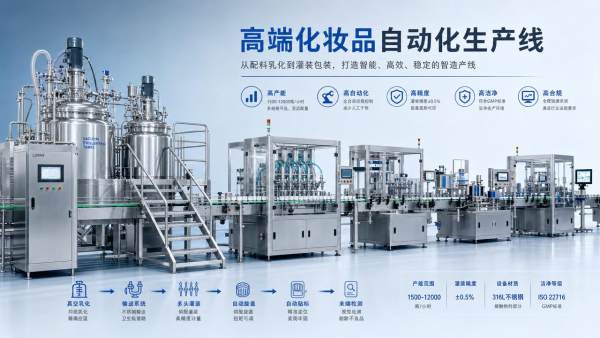
Why does cosmetic manufacturing line price vary so widely from one supplier to another? For financial approvers, the answer goes far beyond basic equipment cost, involving capacity, automation level, compliance standards, material quality, and long-term operating efficiency. Understanding these pricing drivers helps decision-makers control capital risk, compare investment value more accurately, and choose a production line that supports both profitability and scalable cosmetic manufacturing.
In beauty and personal care production, the same line description can hide major differences in output per hour, process stability, cleaning design, documentation depth, and utility consumption. A filling and emulsifying system quoted at one price may look comparable to a lower-cost alternative, yet the cost gap often reflects very different assumptions about risk, labor, maintenance, and compliance.
For finance teams reviewing capital expenditure, the key question is not simply whether a line is cheaper at purchase. It is whether the total investment can support forecast volume, reduce reject rates, shorten changeover, and remain compliant across 3 to 5 years of operation. This is especially important in cosmetics, where batch consistency, hygiene, packaging flexibility, and time-to-market directly affect margin.
AECS tracks these underlying drivers across cosmetic automated production lines, from vacuum homogenizing and heating systems to high-speed filling, sealing, labeling, coding, and end-of-line inspection. For financial approvers, a clearer view of cosmetic manufacturing line price drivers helps separate justified cost from avoidable overspending.
Why cosmetic manufacturing line price gaps can be so large
Price differences often begin with scope. One supplier may quote a semi-automatic line covering only mixing, filling, and manual packing, while another includes CIP-ready tanks, automatic cap sorting, servo-driven dosing, checkweighing, coding, and carton handling. On paper both are “cosmetic production lines,” but the investment level is fundamentally different.
In practical terms, cosmetic manufacturing line price may differ by 30% to 200% depending on whether the system is designed for 500 bottles per hour, 3,000 bottles per hour, or 8,000 bottles per hour. A line for facial cream, mask essence, or lotion also has different viscosity, heating, and anti-foaming requirements, which directly influence tank design and pump selection.
1. Capacity and throughput design
Throughput is one of the biggest price drivers. A line built for 1,000 units per hour may use simpler conveyors, fewer filling heads, and lower control complexity. At 5,000 to 6,000 units per hour, suppliers typically need stronger frame construction, higher-precision synchronization, larger buffers, and more stable product feeding systems.
Finance teams should compare not only peak speed but also stable operating speed. A quoted maximum of 120 units per minute may translate into only 75 to 85 units per minute under real viscosity and packaging conditions. That difference changes labor cost, amortization efficiency, and payback period.
2. Automation level and labor substitution
A lower quote often means more manual intervention. Manual bottle feeding, cap placement, batch coding, and carton loading reduce initial cost but increase headcount. In regions where labor cost is rising 8% to 15% annually, a more automated line may recover the premium within 18 to 36 months.
Automation also affects consistency. Servo filling, vision inspection, and PLC recipe management can reduce dosage deviation and packaging errors. For premium skincare or oral care products, even a 1% to 2% reduction in waste can materially change the investment case.
Typical automation layers
- Basic: manual loading, pneumatic filling, simple sealing, limited data logging
- Intermediate: servo filling, automatic cap handling, touchscreen recipes, alarm diagnostics
- Advanced: CIP integration, vision inspection, MES connectivity, automatic case packing, OEE monitoring
3. Materials, hygienic construction, and durability
The difference between contact parts, weld finish, gasket quality, and corrosion resistance has a direct effect on cosmetic manufacturing line price. Equipment built with higher-grade stainless steel, smoother internal surfaces, and cleaner piping layout usually costs more upfront, but it reduces contamination risk and simplifies cleaning validation.
For emulsions, serums, and gel products, tank design is not cosmetic detail. Homogenizer speed range, vacuum stability, heating uniformity, and scraper geometry affect batch quality. If the process requires particle dispersion below 10 microns or stable emulsification across 500 kg to 2,000 kg batches, cheaper equipment may not hold process consistency.
The table below shows how a similar project brief can produce very different price levels once technical scope is defined in measurable terms.
The key takeaway is that cosmetic manufacturing line price is rarely a simple supplier markup issue. It usually reflects a different technical baseline. Finance approvers should require a line-by-line scope comparison before treating two quotes as equivalent.
The cost components financial approvers should evaluate beyond purchase price
A capital request becomes easier to defend when the cost structure is broken into visible components. In cosmetic manufacturing, the largest hidden cost is often not the machine itself but the operational compromises created by an under-specified line.
Equipment scope versus project scope
Some quotations include only core machines. Others include utility integration, installation, commissioning, operator training, spare parts, change parts, and trial batches. A line priced 20% lower can become 10% higher after site adaptation, extra conveyors, electrical upgrades, and local debugging are added.
Financial reviewers should separate at least 5 categories: core equipment, auxiliary systems, engineering services, documentation, and post-installation support. This structure prevents under-budgeting and improves supplier comparability.
Energy, utilities, and maintenance burden
Utility consumption should not be ignored. Vacuum systems, heating jackets, compressed air demand, and chill water requirements can significantly affect monthly operating cost. A high-shear homogenizer running 30 to 60 minutes per batch has a very different energy profile from a basic agitator.
Maintenance intervals matter too. If seals, pumps, or sensors require replacement every 6 months instead of every 18 months, the lower initial cosmetic manufacturing line price may lose its advantage quickly. Downtime cost is especially relevant for seasonal launches and contract manufacturing schedules.
Changeover efficiency and SKU flexibility
Many cosmetic manufacturers now manage 20, 50, or even 100+ SKUs across bottles, tubes, jars, sachets, and masks. If a line needs 3 hours for format changeover, compared with 30 to 45 minutes on a better-designed system, annual lost capacity can be substantial.
This is where finance and operations should align. A lower-cost line optimized for one package format may look efficient on day one but become restrictive when product mix expands. For growth-stage brands, flexibility often deserves a higher capital weighting than absolute lowest acquisition cost.
The following framework helps approvers compare quoted prices against lifetime economic impact rather than invoice amount alone.
When this framework is applied, a more expensive line can prove financially safer if it reduces labor, stabilizes output, and avoids early replacement. That is the difference between sticker price and investment value.
How compliance, documentation, and quality assurance raise or lower price
In cosmetic production, compliance is not only a regulatory matter. It is a cost-control matter. A line with poor documentation, weak traceability, or hard-to-clean contact surfaces can increase audit burden, product risk, and customer complaint exposure. That is why cosmetic manufacturing line price often rises with stronger documentation and validation support.
Documentation depth is part of the asset
For finance teams, manuals and certificates may seem secondary, yet they reduce implementation friction. Material certificates, wiring diagrams, spare parts lists, FAT records, and maintenance schedules shorten startup time and support internal approval. In multi-site or export-oriented operations, these documents are often essential.
A supplier offering a 6 to 10 week build with almost no documentation may create delays later during commissioning or qualification. By contrast, a more structured supplier may quote longer lead times, such as 10 to 16 weeks, because the package includes testing, records, and acceptance preparation.
Cleaning design and contamination prevention
Cross-contamination risk is especially important when manufacturers switch between whitening products, active serums, fragrances, and sensitive oral care formulations. Dead corners, rough welds, and incomplete drainage increase cleaning time and contamination risk. Better hygienic design raises initial cost, but it also protects brand reputation and batch release reliability.
For plants running 2 to 4 product families each week, even a 20-minute reduction in cleaning time per changeover accumulates into meaningful available production hours over a year. This is one reason premium line design commands a higher quotation.
Four compliance-related questions approvers should ask
- What documents are included before shipment and after installation?
- Are product-contact surfaces and seals suitable for the intended formulations?
- How is line cleaning executed, verified, and documented?
- What acceptance criteria define successful FAT and SAT completion?
Common supplier quoting traps that distort price comparison
A major reason buyers misunderstand cosmetic manufacturing line price is inconsistent quotation structure. Two offers may use similar language while excluding different items. This creates false price gaps and can lead to budget overruns after contract signature.
Trap 1: Peak speed without process conditions
Speed should be tied to product viscosity, container size, fill volume, and closure type. If a line is quoted at 100 units per minute but tested only with water-like liquid in a standard bottle, it may not reach that level with a cream or gel. Finance teams should request speed ranges under actual product scenarios.
Trap 2: Hidden change parts and format costs
Some suppliers quote one format only. Additional change parts for jar sizes, pump heads, sachet widths, or tube diameters may be charged later. For a portfolio with 8 to 12 packaging variants, these add-ons can materially shift total project value.
Trap 3: Limited service scope
Remote debugging, startup support, operator training, and spare part kits should be clarified early. A cheaper quote with no commissioning support may lead to longer ramp-up and higher internal engineering burden. For first-time automation buyers, this service gap is often more expensive than it first appears.
Trap 4: Low initial price, high lifecycle exposure
If line stoppages delay customer orders, finance is no longer evaluating machine price alone. It is evaluating revenue risk. A production line that misses launch windows for a hero serum, facial mask, or oral care product can create costs far beyond equipment depreciation.
A practical approval model for judging cosmetic manufacturing line price
Financial approvers need a model that converts technical differences into investment logic. The most effective approach is to score line proposals across 4 dimensions: capacity fit, operating cost, compliance readiness, and growth flexibility. This makes discussions with operations and procurement more objective.
Step-by-step review process
- Define annual demand, shift pattern, and target utilization, such as 65% to 80%.
- Map current and planned SKUs, including viscosity range and package formats.
- Compare at least 3 suppliers on equal technical scope and service boundary.
- Estimate 3-year OPEX for labor, energy, maintenance, and changeover losses.
- Test risk scenarios, including delayed spare parts, unstable filling, and future expansion.
What a strong financial decision looks like
A sound approval does not always select the lowest cosmetic manufacturing line price. It selects the line with the strongest ratio of output stability, flexibility, compliance support, and total operating economics. In many cases, the better financial decision is the one that protects margin under real production complexity.
For brands expanding into premium skincare, high-end oral care, or contract manufacturing, the production line is not just a machine asset. It is the operating backbone behind product quality, launch speed, and scalable revenue. Treating price as a strategic variable rather than a one-time purchase figure leads to better capital discipline.
If you are evaluating a new project, expansion line, or supplier shortlist, AECS can help translate technical configuration into investment clarity. Our industry intelligence approach supports financial approvers who need to assess cosmetic manufacturing line price with greater confidence, lower hidden risk, and stronger long-term return. Contact us to discuss your production goals, request a tailored comparison framework, or explore more solutions for automated cosmetic manufacturing.
Related Intelligence
- Cosmetic Filling LinesChoosing a Filling and Sealing Machine Manufacturer: Factory Trial ChecklistChoose a filling and sealing machine manufacturer with confidence. Use this factory trial checklist to verify fill accuracy, seal integrity, output, and support before you invest.
- Cosmetic Filling LinesSkincare Manufacturing Solutions: Choosing Filling Lines for Creams and SerumsExplore cosmetic manufacturing solutions for skincare. Compare cream and serum filling lines for accuracy, easy cleaning, and reliable output to find the right fit for your production.
- Cosmetic Filling LinesCosmetic Manufacturing Line Price: Cost Drivers and Budgeting for New PlantsCosmetic manufacturing line price explained: compare cost drivers, automation, compliance, utilities, and total plant-ready budgeting for smarter investment decisions.
The Morning Broadsheet
Daily chemical briefings, market shifts, and peer-reviewed summaries delivered to your terminal.
