

The Authority in Global Agricultural Chemistry & Bio-Resources
Fluid dynamics in aesthetics affects fill quality
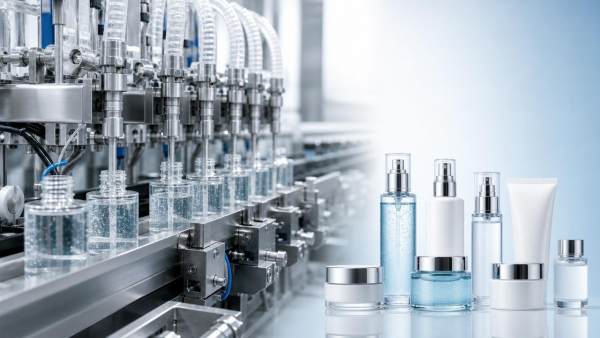
In high-speed cosmetic and personal care production, fluid dynamics in aesthetics directly determines whether serums, emulsions, gels, and foams are filled with precision, stability, and minimal waste. For technical evaluators, understanding viscosity behavior, shear response, nozzle geometry, air entrainment, and temperature control is essential to judging equipment performance beyond surface specifications. This article examines how fluid-flow principles influence fill quality, helping teams assess automated filling systems with a more rigorous, engineering-led perspective.
Why fluid dynamics in aesthetics is a fill-quality issue, not only a production issue
Cosmetic filling looks simple from the outside: pump product, dispense volume, seal the package. In reality, the product behaves as a moving material system.
Fluid dynamics in aesthetics connects formulation rheology, equipment motion, container geometry, and consumer-facing appearance. A slight flow mismatch can create bubbles, tailing, stringing, splashing, underfill, or visual separation.
For AECS, this subject sits naturally beside optoelectronic thermodynamics, oral-care jet microflows, and cosmetic automated production lines. Appearance economy products depend on controlled energy and controlled flow.
What technical evaluators should observe first
- Whether filling accuracy remains stable after the product temperature changes during a long shift.
- Whether the nozzle creates air pockets when handling high-viscosity creams or surfactant-rich foams.
- Whether pump selection matches shear-sensitive emulsions instead of damaging texture through excessive mechanical stress.
- Whether cleaning, changeover, and validation procedures are compatible with GMP-oriented cosmetic manufacturing.
The key point is practical: fluid dynamics in aesthetics determines whether a machine performs consistently under real product variation, not only during a clean factory demonstration.
Which product behaviors cause filling defects?
Different beauty and personal care formulas respond differently to motion. A low-viscosity toner may splash, while a gel mask may resist flow and trap air.
Before selecting equipment, evaluators should classify the product by flow behavior. This is where fluid dynamics in aesthetics becomes a measurable procurement tool.
This table helps convert product language into engineering language. Fluid dynamics in aesthetics makes the evaluator ask why a defect occurs, not merely where it appears.
How nozzle geometry and flow path design affect final appearance
Nozzle design is often underestimated because it is a small component. Yet it is the final control point before product meets the container.
In fluid dynamics in aesthetics, the nozzle must manage velocity, pressure drop, product breakup, and cut-off behavior. The wrong nozzle can turn a stable formula into a defective fill.
Nozzle decisions that change the result
- Use bottom-up filling for viscous products that trap air when dispensed from the container mouth.
- Use submerged or near-surface filling for foaming products to reduce turbulent free-fall impact.
- Select anti-drip shutoff designs for low-viscosity essences that continue flowing after pump stop.
- Match nozzle diameter with particle, pearl, capsule, or exfoliant content to prevent clogging and shear damage.
The flow path also matters. Long hoses, abrupt elbows, dead corners, and rough transitions increase shear exposure and cleaning complexity.
A technically mature filling system should show smooth product transfer, predictable pressure behavior, and documented cleaning access. Those details protect both fill accuracy and compliance confidence.
Which filling technology best fits different aesthetic products?
A good selection process does not begin with machine speed. It begins with the formula, package, accuracy target, hygiene requirement, and launch schedule.
The following comparison links fluid dynamics in aesthetics with common filling system decisions used in cosmetic and personal care manufacturing.
No single method fits every aesthetic product. Fluid dynamics in aesthetics supports evidence-based selection, especially when one line must handle serum, lotion, and gel formats.
What parameters should technical evaluators request before approval?
Brochures often emphasize filling speed, but speed without stable flow control can increase scrap and rework. Evaluators need operating windows, not only headline numbers.
When reviewing fluid dynamics in aesthetics, request data across viscosity range, temperature range, container types, and target volumes. The goal is to expose edge conditions early.
These questions are not theoretical. They protect budget, launch timing, and batch consistency when a production line shifts from samples to commercial output.
Where do budget, delivery, and compliance pressures collide?
Technical evaluators rarely judge equipment in isolation. They must balance capital cost, factory layout, product roadmap, operator skill, and regulatory expectations.
Fluid dynamics in aesthetics is useful because it clarifies which costs are visible and which costs appear later as scrap, complaints, or downtime.
Common hidden costs in filling projects
- Excess product giveaway caused by unstable dosing at high speed or during viscosity drift.
- Additional inspection labor required when bubbles or inconsistent levels reduce premium shelf appearance.
- Long changeover time for multi-SKU lines using different bottles, jars, pumps, and pouches.
- Delayed qualification when cleaning documentation, material certificates, or electrical safety files are incomplete.
In global beauty manufacturing, compliance may involve GMP principles, ISO 22716 guidance, electrical safety expectations, food-grade contact materials, and market-specific labeling controls.
AECS encourages evaluators to treat compliance as a design input. A machine that fills well but cannot support documentation may still create export risk.
How to test fluid dynamics in aesthetics during factory acceptance
A factory acceptance test should replicate commercial reality. Testing only water on a cosmetic filler gives little insight into emulsions, gels, or foam systems.
To evaluate fluid dynamics in aesthetics, bring representative formulas, containers, closures, and target fill volumes. Include difficult products, not only easy products.
Recommended acceptance sequence
- Confirm baseline accuracy using a stable product and calibrated weighing method.
- Run the highest-viscosity formula to observe pressure rise, stringing, and incomplete cut-off.
- Run the foaming or low-viscosity formula to test splashing, air capture, and neck cleanliness.
- Operate at expected production speed for enough cycles to reveal thermal drift and mechanical repeatability.
- Perform a changeover and cleaning simulation to verify downtime assumptions and operator workload.
The evaluation should record reject causes, fill-weight distribution, adjustment frequency, and visual defects. Photographs and batch notes make later supplier discussions more precise.
FAQ: practical questions about fluid dynamics in aesthetics
How do I know whether a filling defect is caused by the formula or the machine?
Start by changing one variable at a time. If bubbles appear only at higher speed, flow path turbulence may be dominant. If defects follow one batch, rheology may be changing.
Fluid dynamics in aesthetics requires cooperation between formulation, process, and equipment teams. Viscosity curves, temperature records, and pump settings should be reviewed together.
Is higher filling speed always better for cosmetic production?
No. Higher speed can reduce unit time, but it can also increase splashing, foaming, product loss, and inspection demand. Stable net output matters more.
For premium skincare or oral-care liquids, the best speed is the fastest speed that still maintains clean containers, accurate weight, and repeatable appearance.
What should be checked when filling products with capsules or particles?
Check nozzle bore, valve design, particle settling, recirculation strategy, and shear exposure. Particles can clog narrow passages or separate during low-flow waiting periods.
A trial should verify both fill weight and particle distribution. Fluid dynamics in aesthetics includes visual uniformity because consumers judge efficacy through appearance.
How early should fluid testing begin in a new product launch?
Testing should begin before final packaging approval. Bottle neck size, jar diameter, pouch stiffness, and dropper design can all affect filling performance.
Early testing prevents expensive redesign when marketing claims, container aesthetics, and manufacturing physics conflict near the delivery deadline.
Why choose AECS for engineering-led filling evaluation?
AECS examines aesthetic technology from physics, compliance, manufacturing, and commercial perspectives. That cross-disciplinary view is valuable when filling quality affects both brand image and regulatory confidence.
Our intelligence framework connects fluid dynamics in aesthetics with automated cosmetic production, high-end personal care devices, and the broader appearance economy.
Technical evaluators can consult AECS for parameter confirmation, filling-technology comparison, supplier questioning, sample-test planning, compliance documentation review, and customization priorities.
If your team is comparing piston, servo, peristaltic, or time-pressure systems, AECS can help translate product behavior into a practical selection checklist.
For quotation communication, delivery-cycle evaluation, certification expectations, or sample support planning, contact AECS with formula type, viscosity range, target package, fill volume, and production capacity.
A better filling decision begins with better flow understanding. Fluid dynamics in aesthetics turns equipment procurement from specification comparison into controlled manufacturing judgment.
Related Intelligence
- Cosmetic Filling LinesChoosing a Filling and Sealing Machine Manufacturer: Factory Trial ChecklistChoose a filling and sealing machine manufacturer with confidence. Use this factory trial checklist to verify fill accuracy, seal integrity, output, and support before you invest.
- Cosmetic Filling LinesSkincare Manufacturing Solutions: Choosing Filling Lines for Creams and SerumsExplore cosmetic manufacturing solutions for skincare. Compare cream and serum filling lines for accuracy, easy cleaning, and reliable output to find the right fit for your production.
- Cosmetic Filling LinesCosmetic Manufacturing Line Price: Cost Drivers and Budgeting for New PlantsCosmetic manufacturing line price explained: compare cost drivers, automation, compliance, utilities, and total plant-ready budgeting for smarter investment decisions.
The Morning Broadsheet
Daily chemical briefings, market shifts, and peer-reviewed summaries delivered to your terminal.
